Last updated November 21, 2026
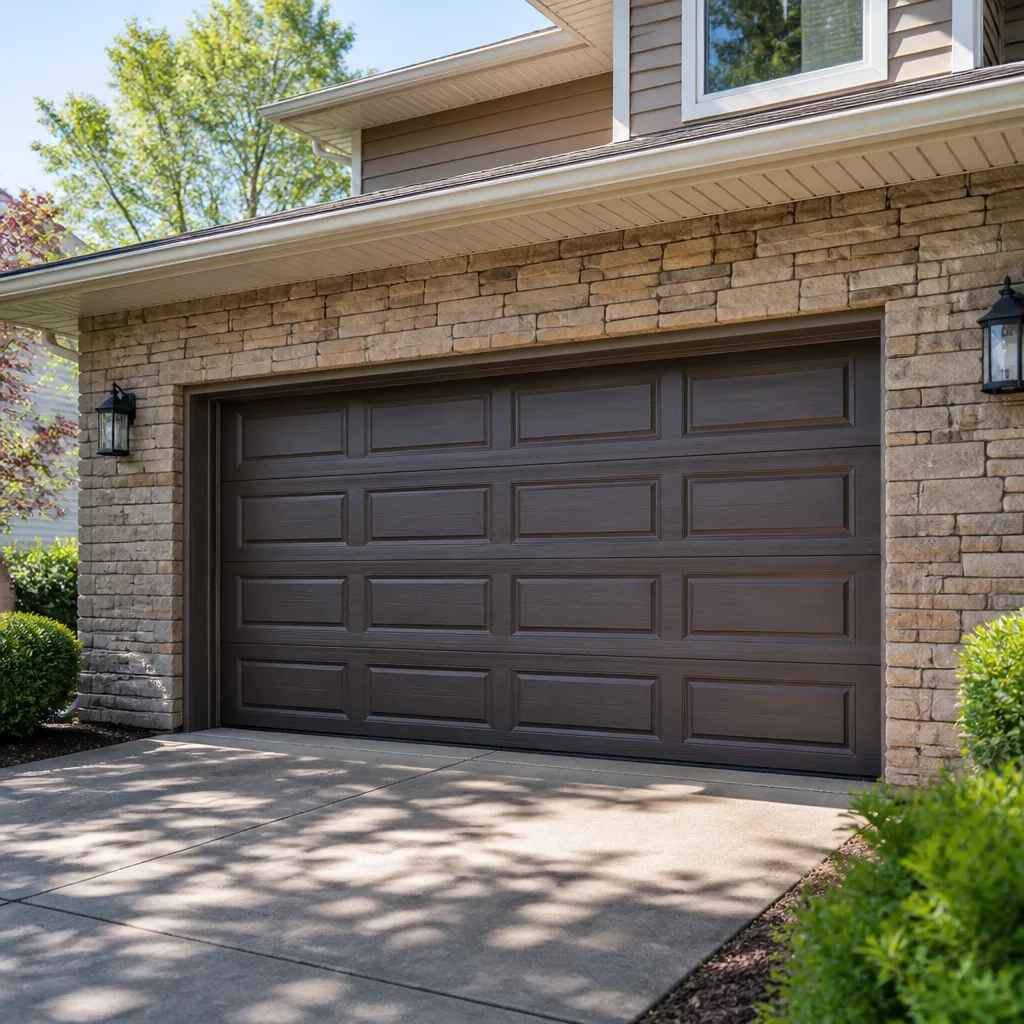 Raised-panel steel
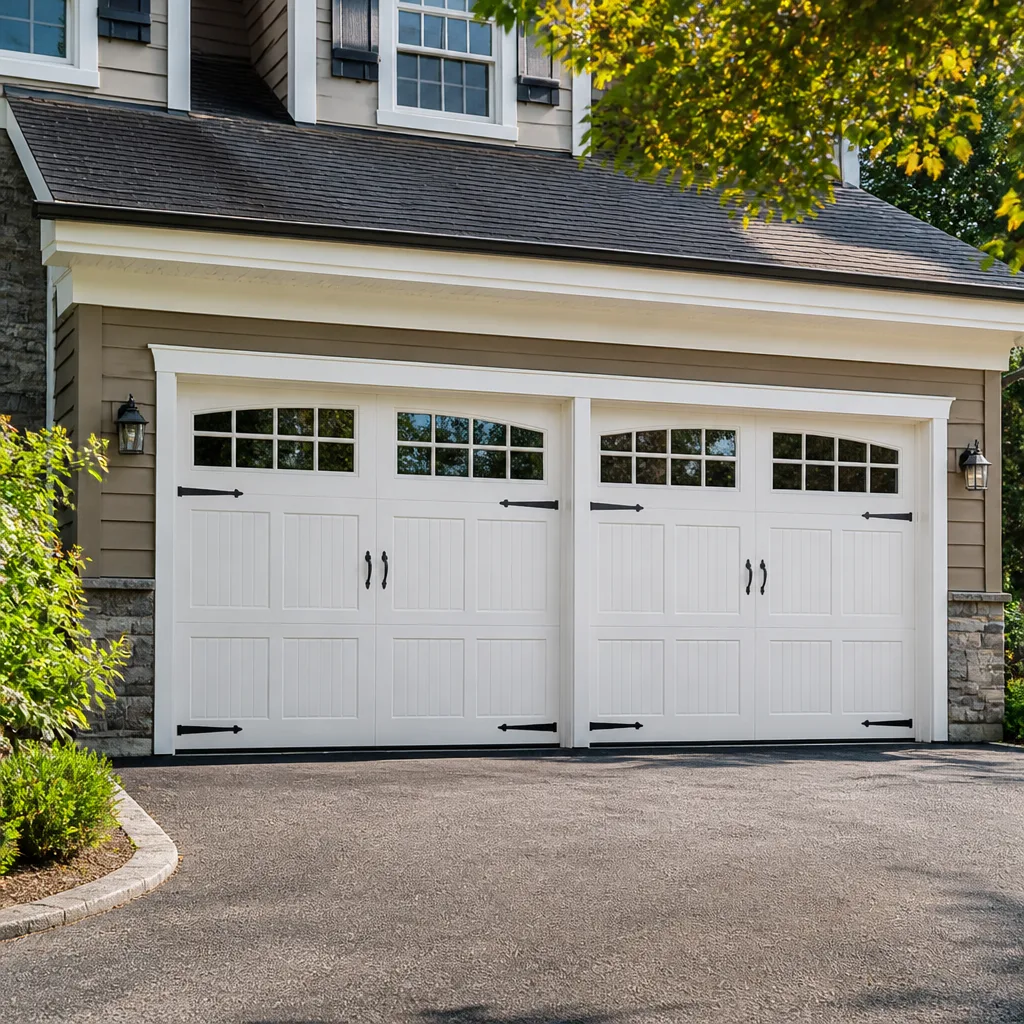 Carriage house
 Modern flush
 Full-view glass
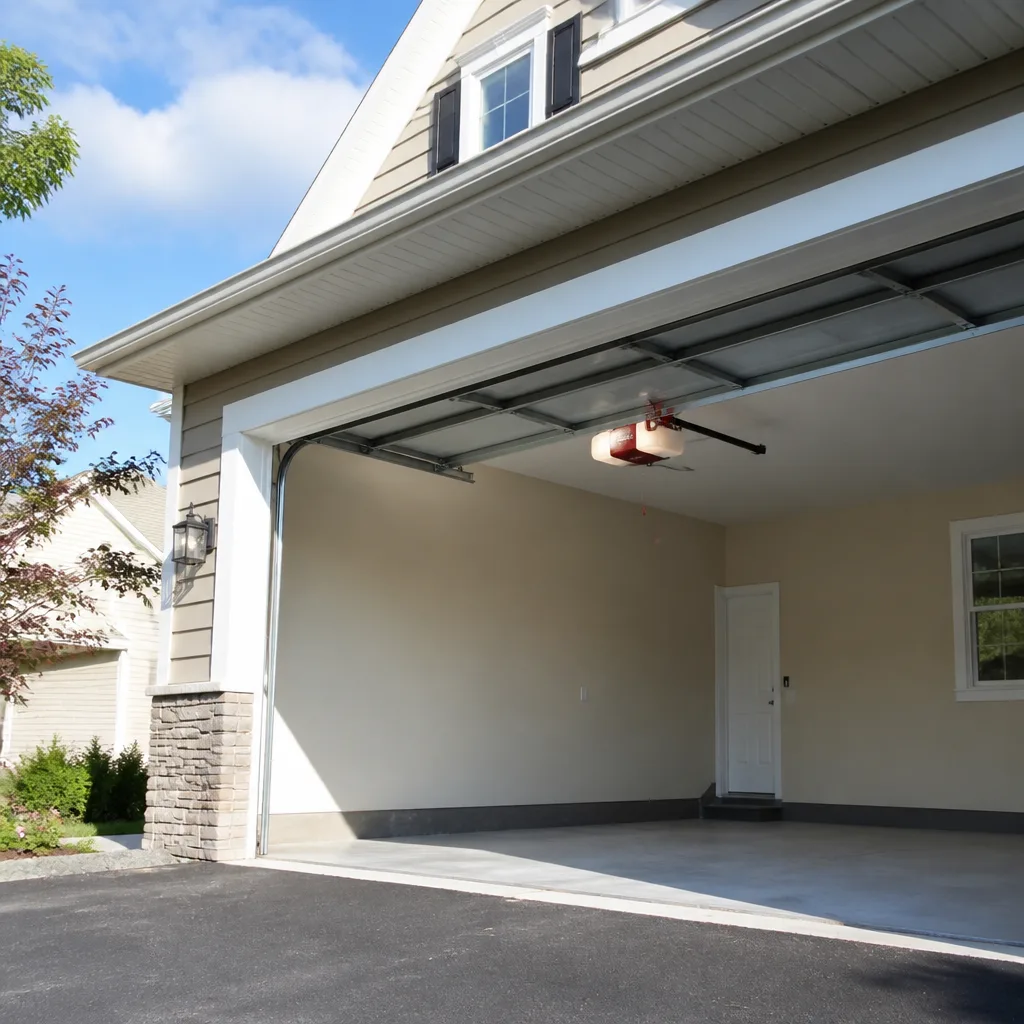 LiftMaster openers
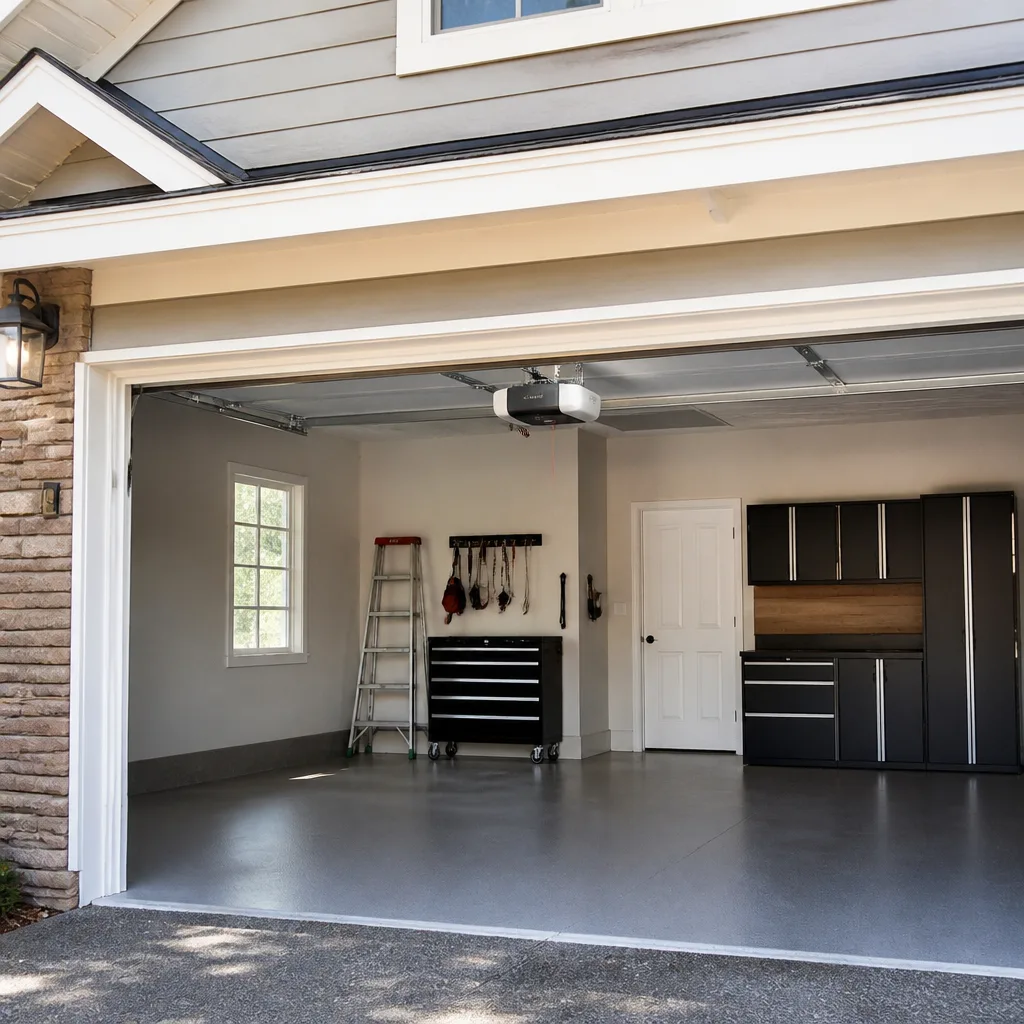 Chamberlain openers
Full 25-point door and opener safety check with every visit - springs, cables, rollers, tracks, and your LiftMaster or Chamberlain opener included
You get a price before we start. It does not change when the pro arrives.
Get your free estimateGarage Door Warning Signs: A Bensonhurst Homeowner’s Reference Guide
Here’s a pattern we run into constantly: a door that opens smoothly but shudders on the way down. Most homeowners assume the track is bent and reach for a wrench. In nearly every case it’s a spring tension imbalance, and “fixing” the track first makes the real problem worse and the eventual bill larger. The same mismatch shows up everywhere. The noise you hear, the slowdown you notice in January, the cable that looks a little fuzzy – each visible symptom points to a specific mechanical cause, and guessing wrong is how a small adjustment becomes a full replacement. This guide maps what you see and hear to what’s actually failing, so you can describe the problem accurately, decide whether it’s a call-today situation, and understand what a technician is telling you when they arrive in Bensonhurst.
Quick Answer
The warning signs that matter most are a door that reverses before closing, a loud bang followed by a dead door, a visible gap or frayed cable, a shutter or judder on the way down, and any intermittent failure that comes and goes. These point to spring, cable, track, or opener faults that get more expensive the longer you wait. If you see a snapped spring or a hanging cable, stop using the door and call a specialist – those are the two failures that can turn a repair into an injury.
Styles & brands we work with
- Raised-panel steel
- Carriage house
- Modern flush
- Full-view glass
- LiftMaster openers
- Chamberlain openers
Table of Contents
- The Symptom-to-Cause Map: What Each Noise and Motion Actually Means
- The Manual Balance Test: Checking Your Springs Without Touching Them
- Cable Warning Signs: Fraying, Kinks, and Anchor-Point Rust
- Why a Slow Door in Winter Is a Different Problem Than a Slow Door in Summer
- When Intermittent Is More Dangerous Than Consistent
- Opener Fault or Door Fault? Splitting the Diagnosis
- Brand-Specific Clues: Raynor, LiftMaster, Chamberlain, and Genie
- What You Should Never Adjust Yourself
The Symptom-to-Cause Map: What Each Noise and Motion Actually Means
Garage door symptoms fall into two families: things you hear and things you see. A single sound usually narrows the culprit to one or two components, which is why careful listening saves diagnostic time. Below is the map we use when a homeowner calls and describes a problem over the phone.
- Grinding: Metal-on-metal contact, almost always worn rollers or a dry, misaligned track. Grinding that tracks a rhythmic pattern suggests a specific roller or hinge, not the whole door.
- Popping: Often a torsion spring winding or unwinding unevenly, or a cable jumping its drum. Popping that precedes a bang is a red flag – the spring is close to failing.
- Squealing: Friction, usually from rollers, hinges, or the opener’s chain or belt. Squealing is the least urgent of the four but the easiest to catch early.
- Banging: Loose hardware, a worn hinge, or a door that’s out of balance and slamming at the end of its travel. Banging is a balance problem until proven otherwise.
- Rattling: Loose bolts, tracks that have pulled from their anchors, or a panel that’s vibrating against a stiff hinge.
A quick way to separate door noise from opener noise: unplug or disengage the opener and open the door by hand. If the noise disappears, the fault is in the opener or its rail. If it’s still there, the door itself is the source. That single test saves a lot of back-and-forth, and it’s the first thing to report when you call for garage door repair in Bensonhurst.
One more pattern worth knowing. A grinding noise that shows up only on the way up but not the way down usually means the door is riding differently in its tracks under tension than it does under gravity. A grinding that appears in both directions points to a roller or hinge issue independent of spring load. Two different diagnoses, two different fixes.
The Manual Balance Test: Checking Your Springs Without Touching Them
You can determine whether your springs are pulling their weight without ever putting a hand on them. The manual balance test lets you feel the door’s weight distribution and judge whether the springs are doing their job – or whether they’re tired, broken, or imbalanced.
- Disengage the opener so the door is free to move by hand. On most openers this is a pull cord or lever.
- Lift the door about halfway and stop. If it stays put, the springs are balancing the door correctly.
- If the door slides down on its own, the springs are under-tensioned or weak.
- If the door wants to fly up on its own, the springs are over-tensioned.
- If the door is very heavy to lift, the springs are exhausted or broken.
Do this test with a hand on the bottom edge but your body out of the door’s path. Never test a door with a visible snapped spring – a door missing a spring on one side can drop hard and fast.
What makes this test useful is that it isolates spring balance from opener performance. A door that “feels stiff” at the opener may actually be a door whose springs are fine but whose rollers are dragging. The balance test rules out one whole category in about a minute.
In Bensonhurst, where many homes sit on narrow lots with shallow garages, the door geometry sometimes forces a torsion setup that’s tighter than what you’d see in a newer suburban build. That doesn’t change the test – the door should still hold itself roughly halfway – but it does mean the fix, when the springs are the cause, is often a same-day spring job rather than a wait-and-see. If your test shows a door that won’t hold its position, an opener repair won’t help. The springs need attention.
Cable Warning Signs: Fraying, Kinks, and Anchor-Point Rust
Of every component on your door, the cable is the one that fails most dangerously. A cable that snaps can whip with enough force to break a windshield or a bone. Cables give you warnings before they fail – you just have to know what to look for.
- Fraying at the drum: Look where the cable winds onto the drum. Frayed strands that stick out like a brush mean the cable is failing there first, and it’s time to stop using the door.
- Kinks: A cable with a kink is a cable that jumped a drum or has been wound unevenly. Kinks are a warning sign that the next cycle could snap it.
- Rust at the anchor point: The bottom bracket and the top anchor point are where rust lives. Surface rust is common; pitted, flaking rust at a stress point is not.
- Slack on one side: Compare the two cables where they run alongside the tracks. If one is taut and the other has visible slack, the door is not pulling evenly and something is wrong upstream.
- Fuzz on the cable ends: A cable that looks fuzzy at either termination has begun to come apart internally. Even if it’s still holding, it’s on borrowed time.
Cables and springs work as a pair. A snapped spring usually takes the cables with it, and a failing cable can yank a spring out of tension. When we diagnose a door, we look at both – not because one is more important, but because replacing one without inspecting the other is the most common way a repair gets undone a week later.
Rust is worth its own note for older Bensonhurst homes. The typical detached or semi-detached garage in neighborhoods like Bath Beach and Gravesend was built decades ago, and the metal in its door has seen a lot of weather. We’re not talking about salt air or anything coastal – Bensonhurst is inland. What we see is ice-melt tracking into the garage, humidity swings through the seasons, and a coat of road splash on the bottom of the door. Each of those puts moisture exactly where cable anchors sit lowest. It’s a reason to inspect the bottom bracket first when a door has spent a few winters unprotected.
Why a Slow Door in Winter Is a Different Problem Than a Slow Door in Summer
A slow-closing door is a symptom, and the season changes what it means. In January, a door that takes two extra seconds to close is usually telling you about temperature. In July, that same lag almost always points to something mechanical. Treating them as the same repair is how homeowners end up paying for work they didn’t need.
Winter slowdown usually comes down to three things:
- Stiff grease. The lubricant inside rollers and hinges thickens in cold. That thickening resists the door’s travel, and the opener works harder to close it. The fix is a proper cold-weather lubricant, not a new opener.
- Contraction. Metal shrinks in cold, which can loosen the fit of a door panel in its track, or shift a track just enough to add drag.
- Spring tension drift. Torsion springs lose a small amount of tension over time, and cold makes that loss more noticeable. A door that’s right on the edge in October will feel sluggish by February.
Summer slowdown means something different. When the door is slow to close in warm weather, the likely causes are a worn opener gear, a failing sensor on the safety-reverse circuit, a bound track, or a door that’s out of balance. Summer doesn’t add drag the way a cold winter does, so anything slow in July is usually a genuine fault.
In Bensonhurst, one local wrinkle makes seasonal confusion more common than it should be. The dense block of row-house and low-rise garages in neighborhoods like Bensonhurst proper and Mapleton often have doors that open onto the sidewalk, so the cycle counts run high – a family that’s in and out all day puts a lot of cycles on the opener and springs. When a high-cycle door slows in cold weather, the seasonal effect stacks on top of simple wear. A door that’s near the end of its spring’s life can feel noticeably slower in winter even when the spring isn’t technically broken. That’s not a track problem, and it’s not really a winter problem either.
When Intermittent Is More Dangerous Than Consistent
A door that fails every time is annoying but predictable. A door that fails one time in five is more dangerous, because you stop expecting it and stop preparing for it. In our experience, intermittent failures are the ones that cause the injuries and the surprise invoices.
Here’s why. A consistent failure – the door won’t open at all – gets fixed within hours because it can’t be ignored. An intermittent failure – the door reverses halfway down once a week, then behaves – gets lived with. Over time, the underlying cause gets worse, and the eventual snap happens during a routine cycle, not a test.
The danger is compounded by where the intermittent failure shows up. A door that reverses sometimes may be a safety sensor fault, which means the door’s own safety mechanism is not reliably detecting what’s in the way. That’s a real risk if anyone uses the garage while the door is cycling. Take that symptom seriously even if it only shows up occasionally.
The specific intermittent problems worth a call rather than a wait:
- A door that reverses before touching the floor, sometimes.
- An opener that clicks but doesn’t engage, sometimes.
- A door that comes down at an angle, sometimes.
- An opener that beeps or flashes a fault code without changing behavior.
- A popping sound that only happens during the last few inches of travel.
Consistent noise, meanwhile, is often the safer kind. A steady grinding follows a known pattern, and you can plan the repair. The intermittent fault hides its pattern, and that’s exactly why it deserves a same-day look. If your Bensonhurst door is doing something that comes and goes, call it in.
Opener Fault or Door Fault? Splitting the Diagnosis
It’s tempting to blame the opener for anything that happens during a cycle, but the opener and the door are two separate systems, and the fault is almost always in one or the other – not both. The manual balance test above splits this cleanly. A door that holds its position at halfway is a balanced door, which means anything still going wrong is coming from the opener, the sensors, or the safe-reverse circuit.
Common opener faults that look like door faults:
- Reversing before closing: usually a safety sensor or a misaligned photo-eye, not a door problem.
- Stopping mid-travel: often the opener’s travel limits have drifted, or a limit switch is failing.
- Running but not moving the door: a stripped gear, a broken chain, or a disengaged manual release.
- Beeping or flashing codes: modern openers diagnose themselves. A remote, keypad, or wall-button problem can masquerade as an opener fault when the issue is really the transmitter.
When the diagnosis needs a specialist, a single call is what a lot of Bensonhurst homeowners tell us they want. One company handling both door and opener work means you’re not coordinating a door technician and an electrician and a rep for the opener brand. The technician who arrives can diagnose the whole system, whether the fault turns out to be the door or the opener.
A useful rule of thumb: if the door moves by hand freely and stays put halfway, the door and springs are probably not the problem. If the door feels heavy or wants to drop, the springs are the problem and the opener is likely just a casualty. Two different calls, two different outcomes.
Brand-Specific Clues: Raynor, LiftMaster, Chamberlain, and Genie
Door and opener brands each have their own language of failure. A technician familiar with a brand reads its symptoms faster because the parts and the fault codes are already known. We work across LiftMaster, Chamberlain, Genie, Clopay, Amarr, Wayne Dalton, Craftsman, and Raynor, and the faster diagnosis matters most when a door is down and the clock is running.
What each brand tends to show:
- LiftMaster: Fault codes on the wall control and a self-diagnostic LED on the motor. A common misread is treating a code as an opener problem when the real cause is a sensor or a misaligned travel limit.
- Chamberlain: Same family as LiftMaster, similar diagnostics. The most common false signal is a “door reverses” fault that traces back to a safety sensor with a dirty lens.
- Genie: Older chain drives can develop a specific pattern of noise at the rail that gets mistakenly blamed on the door. Newer models report faults through a beep pattern.
- Raynor: ComfortLift and similar torsion or extension setups sometimes surface a balance problem as an uneven-track symptom. It looks like a track issue and isn’t.
- Clopay: Panel door systems from Clopay often show a hinge wear pattern that produces a rattle on the way down – a door fault, not an opener fault.
- Amarr and Wayne Dalton: Older installs sometimes carry proprietary hardware that a generalist can’t source off the shelf. Sourcing the right part is the difference between a one-visit fix and a two-week wait.
- Craftsman: Vintage openers sometimes report a fault that looks like a gear failure but is actually a limit-switch drift.
The point of knowing brands isn’t loyalty – it’s that the diagnostic path is shorter and the parts arrive correct. If you’re ready to talk through a full replacement rather than a repair, that’s a different conversation and it starts with a measure, not a same-day dispatch. We cover that under garage door installation.
What You Should Never Adjust Yourself
Three parts of a garage door system can hurt you, and none of them are homeowner-friendly. A torsion spring holds enough stored energy to move a car – when it releases suddenly, the results are serious and sometimes permanent. The cables are under the same tension, and a snapped cable is unpredictable. And the bottom bracket, where the cable anchors to the door, is the single most dangerous place to put a hand.
What this means in practice:
- Never unwind, adjust, or “help” a torsion spring. It’s not a matter of strength – it’s energy stored in a system that doesn’t stop to ask if you’re ready.
- Never remove or loosen the bottom bracket. The cable tension sits right there.
- Never cut or modify a cable.
- Never operate a door with a visible snapped spring, hanging cable, or a bottom bracket that looks pulled or bent.
- Do not lift a door with a broken spring by hand – it can be far heavier than you expect, and it can come down without warning.
What you can safely do: watch, listen, report. The manual balance test is the deepest diagnostic we recommend for a homeowner because it puts no hand on a spring. Everything past that point is trained-professional territory. If you’re in Bensonhurst and not sure whether what you’re seeing falls on the safe side of the line, call and describe it. We can tell you over the phone whether it’s a today problem.
We take spring repair seriously as a specialty because it’s the job most generalists outsource or decline. Our technicians have up to 12 years of experience working springs, and it’s a job we do as routine work, not as an exotic add-on.
Common Mistakes to Avoid
- Treating a shutter on the way down as a track problem. A door that shudders on the way down is almost always a spring tension imbalance. Bending the track to compensate makes the real fault worse and can add cost to the eventual repair.
- Waiting for a “consistent” symptom before calling. Intermittent reversing, intermittent beeps, intermittent popping – each of those can be the precursor to a full failure. The safe move is to call the first time you notice the pattern.
- Lubricating springs and cables with household oil. The wrong lubricant attracts grit and can accelerate wear. Use only what the manufacturer specifies for the component, and when in doubt, ask.
- Assuming a slow door in winter needs a new opener. Cold-weather lag is usually stiff grease and contraction, not a failing opener. Diagnose the season before you diagnose the motor.
- Buying a replacement opener before confirming the door is balanced. A brand-new opener on an out-of-balance door wears out faster and voids nothing but still costs you. Balance first.
- Calling a generalist for a spring job. Springs are the highest-risk item on the door. A generalist who “will give it a try” is the wrong call, both for safety and for the result.
- Ignoring brand. If your opener is a LiftMaster or a Chamberlain and the wall control is giving you a code, that code is a direct answer to what’s wrong. A technician who knows the brand reads it and moves on.
See the difference
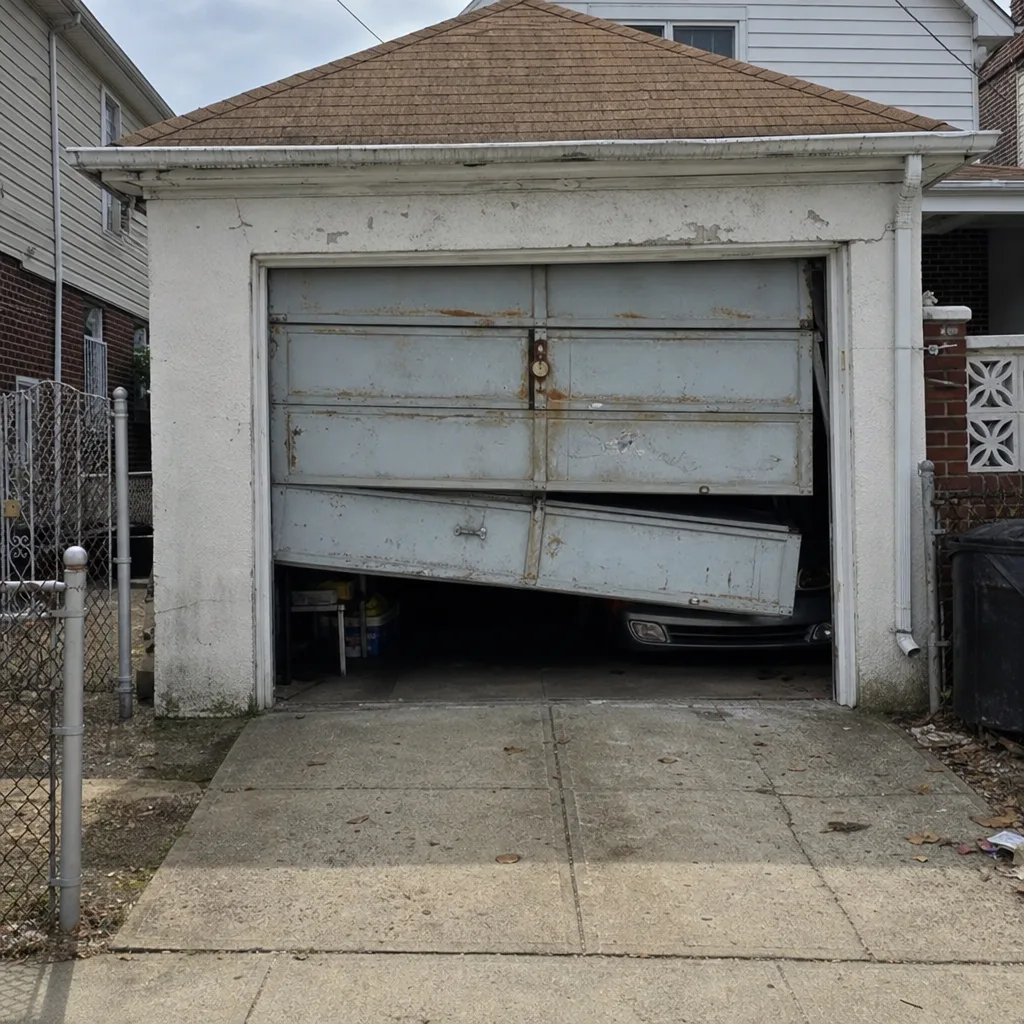 Before
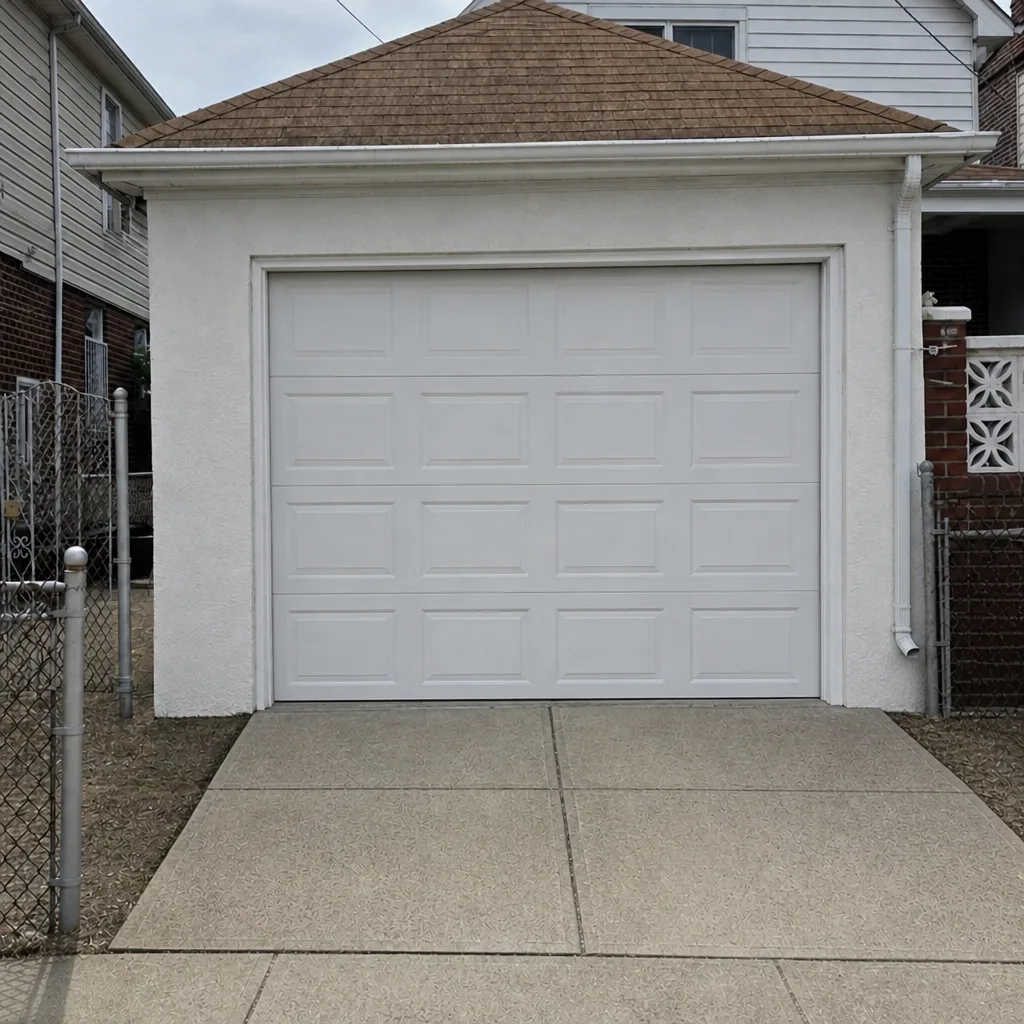 After
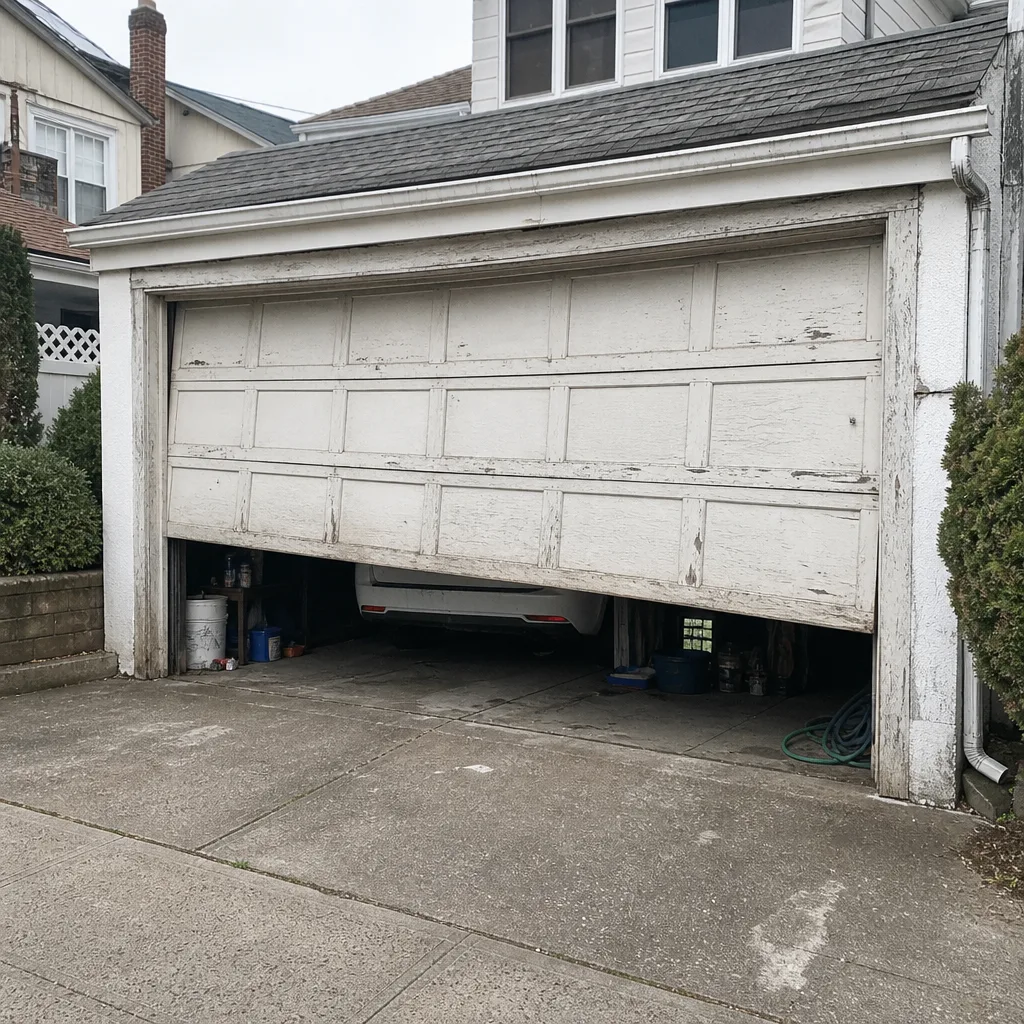 Before
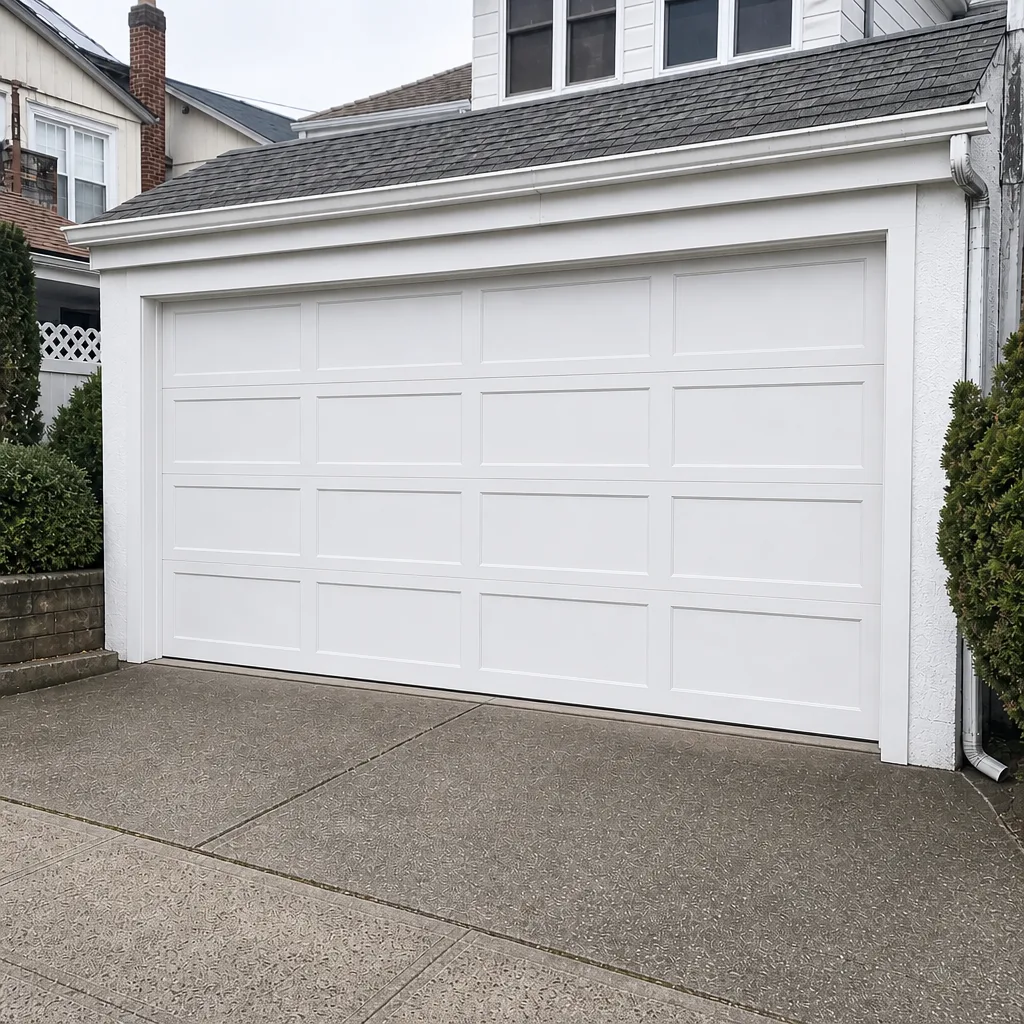 After
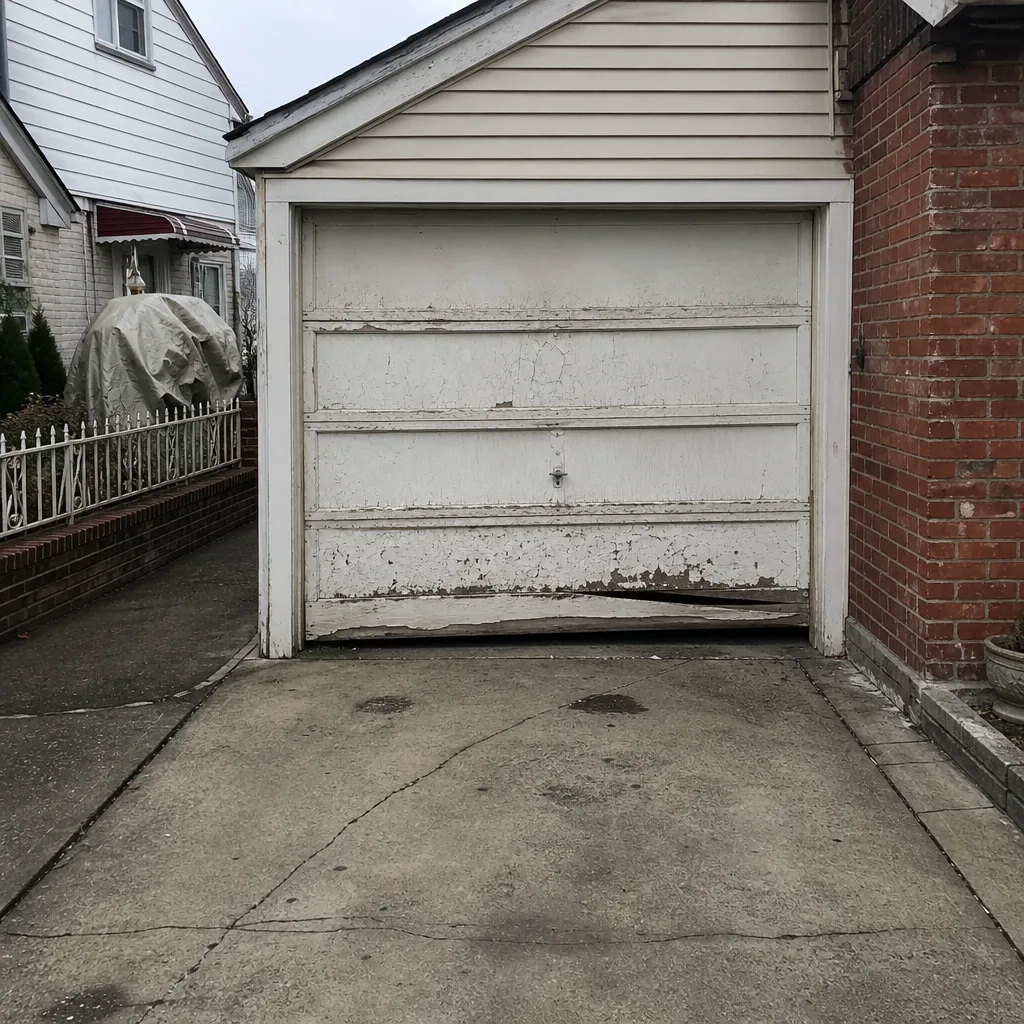 Before
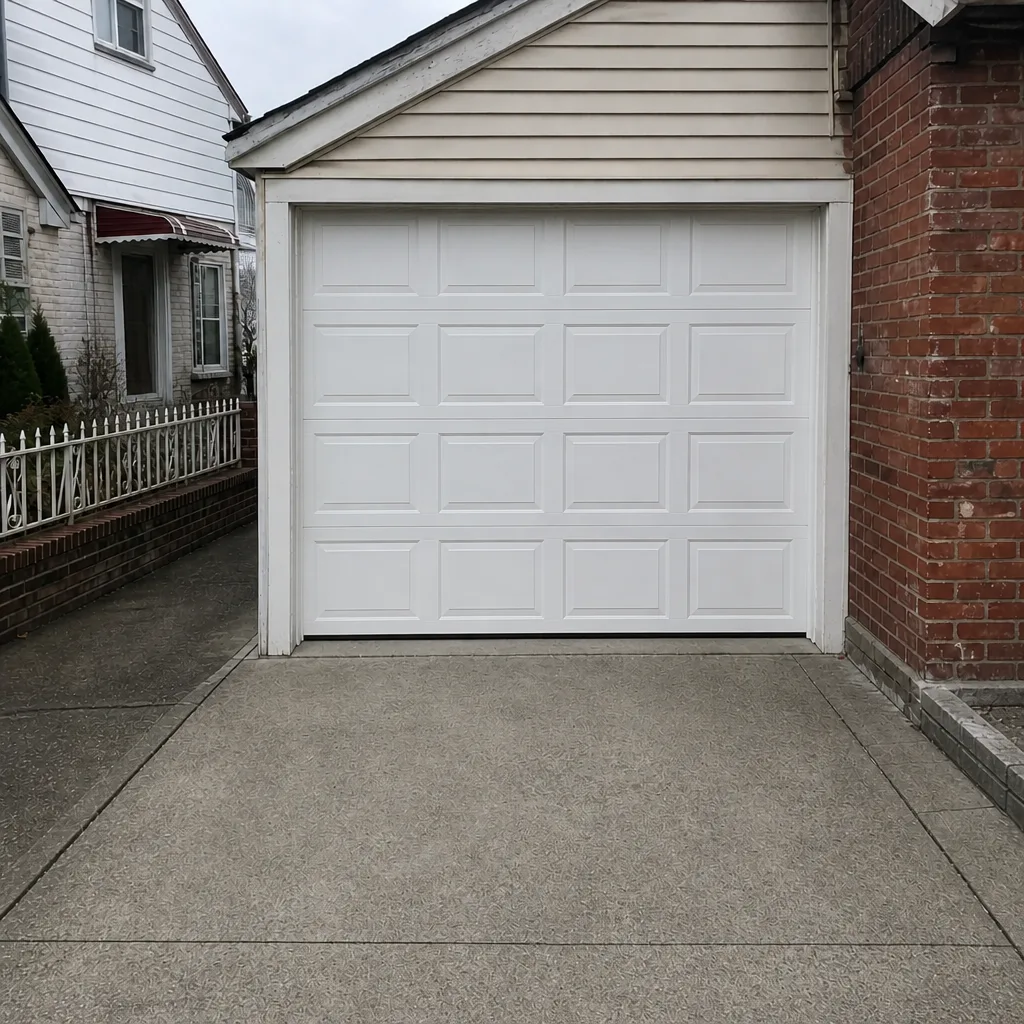 After
When to Call a Professional
Call a professional when you see a snapped spring, a hanging or frayed cable, a bottom bracket that looks pulled, a door that won’t stay halfway in the balance test, or a safety sensor that reverses the door without a clear obstruction. Call when an opener beeps or flashes a code you can’t identify, when a door comes down at an angle, or when an intermittent fault has happened more than once. If the door is stuck open and you can’t secure the garage, that’s an emergency call, not a wait-and-see. We offer same-day service for repair calls in Bensonhurst and emergency response for the situations where the door is the only thing between your home and the street. Our free estimates mean you’ll know the number before anyone starts work.
Garage Door Repair Bensonhurst offers free estimates in Bensonhurst – call (833) 508-9946.
Frequently Asked Questions
A door that feels heavy to lift by hand, or won’t hold its position halfway up during the manual balance test, is the clearest early sign. A loud bang followed by a door that won’t open usually means the spring has already failed. Call (833) 508-9946 for an exact quote on a spring replacement – estimates are free.
Yes. Springs, cables, tracks, and most opener faults can usually be repaired the same day, and a stuck or inoperable door qualifies for emergency service. When you call, describe the symptom accurately – what you hear, what you see, whether the door reverses – and the technician arrives prepared. For an exact quote, call (833) 508-9946.
The written estimate you approve is the price. The quote comes after a diagnosis, before any work starts, and we don’t start work until you agree to the number. If a diagnosis reveals something our phone conversation couldn’t have predicted, we’ll explain it and quote the revised price before touching anything. Call (833) 508-9946 for a free estimate.
The local pros we connect you with are licensed and insured as their state requires. We work with specialists who do garage doors as their trade, not generalists who add it to a list. Our technicians have up to 12 years of experience and work the major brands – LiftMaster, Chamberlain, Genie, Clopay, Amarr, Wayne Dalton, Craftsman, and Raynor. Call (833) 508-9946 to schedule.
Cold thickens the lubricant in rollers and hinges, metal contracts and can add drag, and springs lose a touch of effective tension. None of that means the opener is failing. If the door is also slow in summer, that’s a different problem and worth a call. Reach us at (833) 508-9946 for a free estimate.
No. Torsion springs and cables store enormous energy, and a sudden release can cause serious injury. The manual balance test – where you disengage the opener and see whether the door holds its position at halfway – is the deepest check we recommend for a homeowner. Everything past that is a trained-professional job. If you’re not sure where the line is, call (833) 508-9946 and describe what you’re seeing.
The Bottom Line
The core of this guide is one idea: the symptom you see is rarely the part that’s failing. A shudder on the way down reads as a track; it’s usually a spring imbalance. A slow door in January reads as an opener; it’s usually cold grease and contraction. A rattle on the way down reads as loose hardware; it’s often a hinge wear pattern specific to the door’s brand. Read the symptom, separate the door from the opener, do the manual balance test, and call when you see something that’s intermittent rather than consistent. Those four habits will save you more money than any price comparison. If you’re in Bensonhurst and something doesn’t look right, we’d rather hear from you before the failure than after it.
Contact Us for a Free Estimate
If your door is showing any of the warning signs in this guide, don’t wait for it to fail. You can Garage Door Repair Bensonhurst today and talk through what you’re seeing with a technician who works your brand. We handle repair, opener repair, spring replacement, and full new-door installation under one company – so you’re not chasing down two different numbers when both the door and the opener are involved. Call (833) 508-9946 for a free estimate. We’ll diagnose first, then give you options and a written price before any work starts.
Written by the team at Garage Door Repair Bensonhurst.