Last updated November 21, 2026
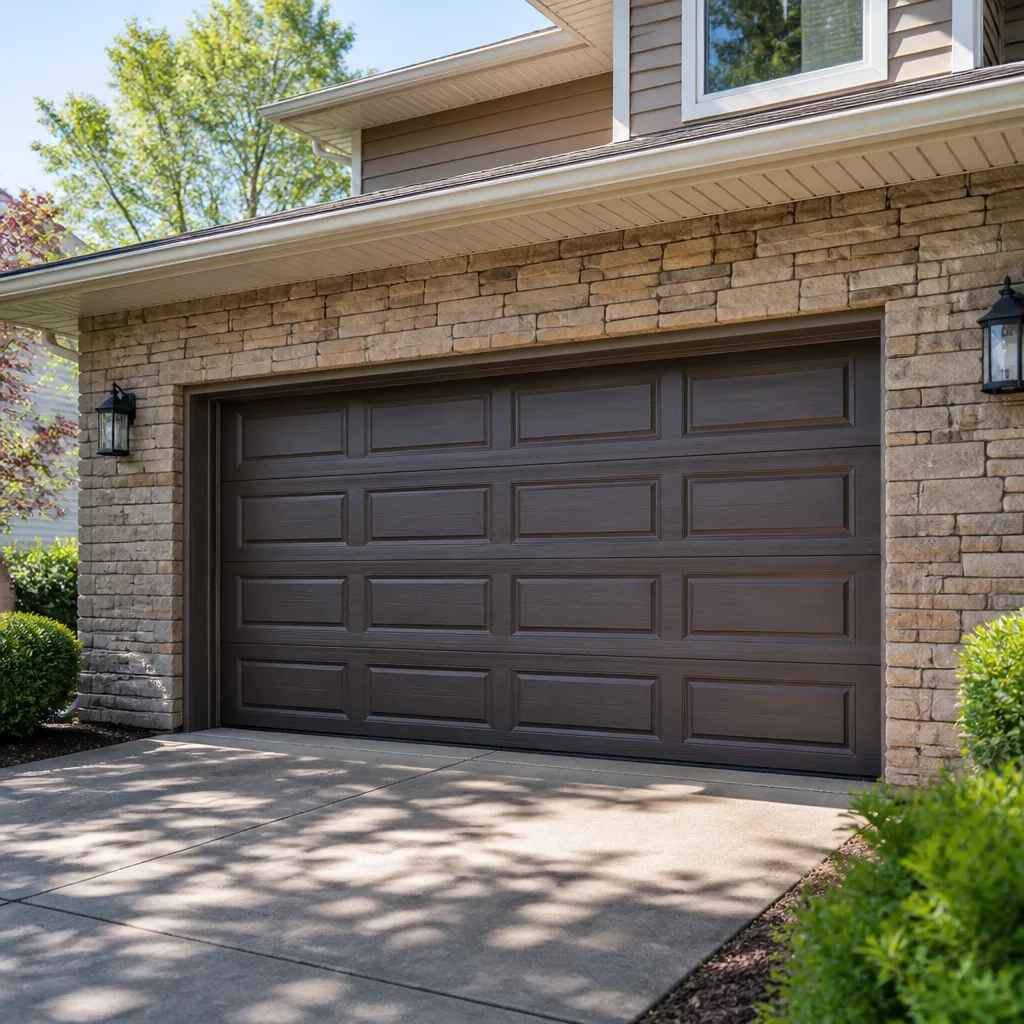 Raised-panel steel
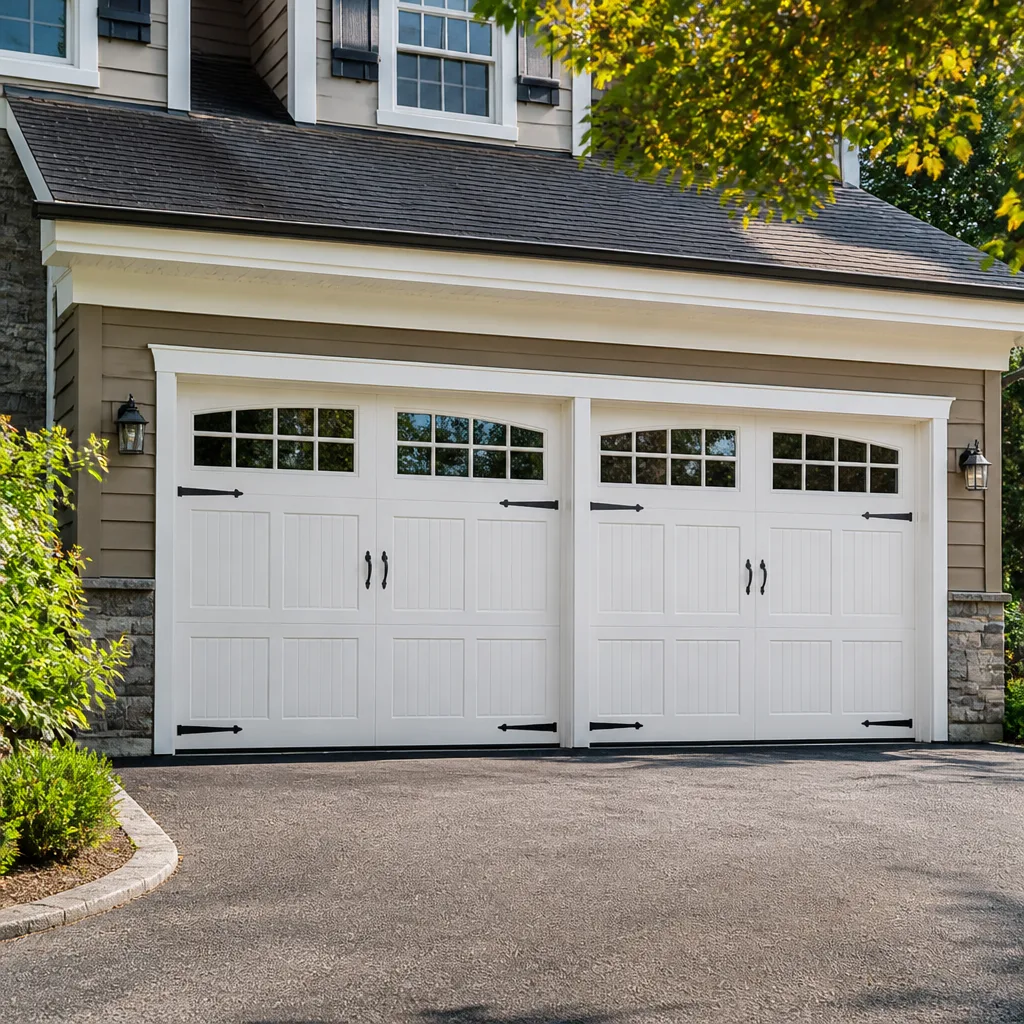 Carriage house
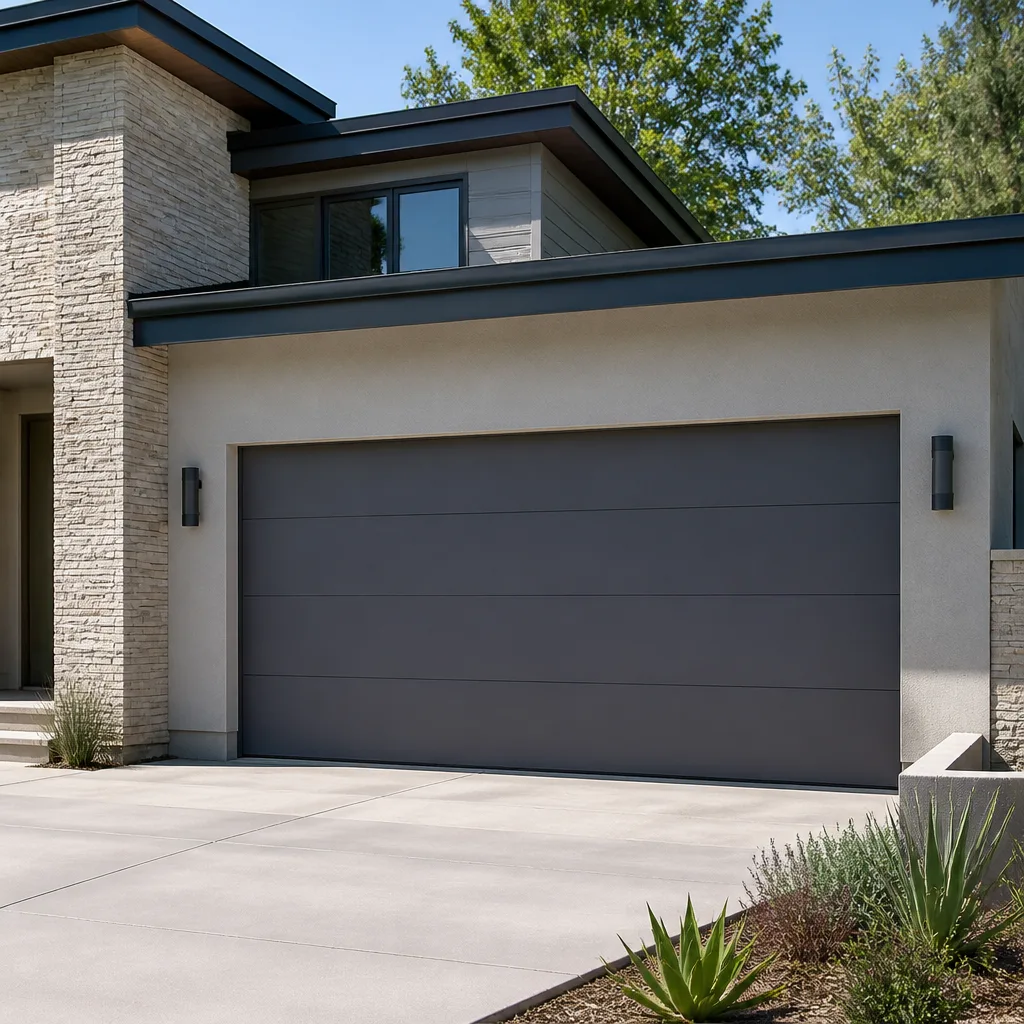 Modern flush
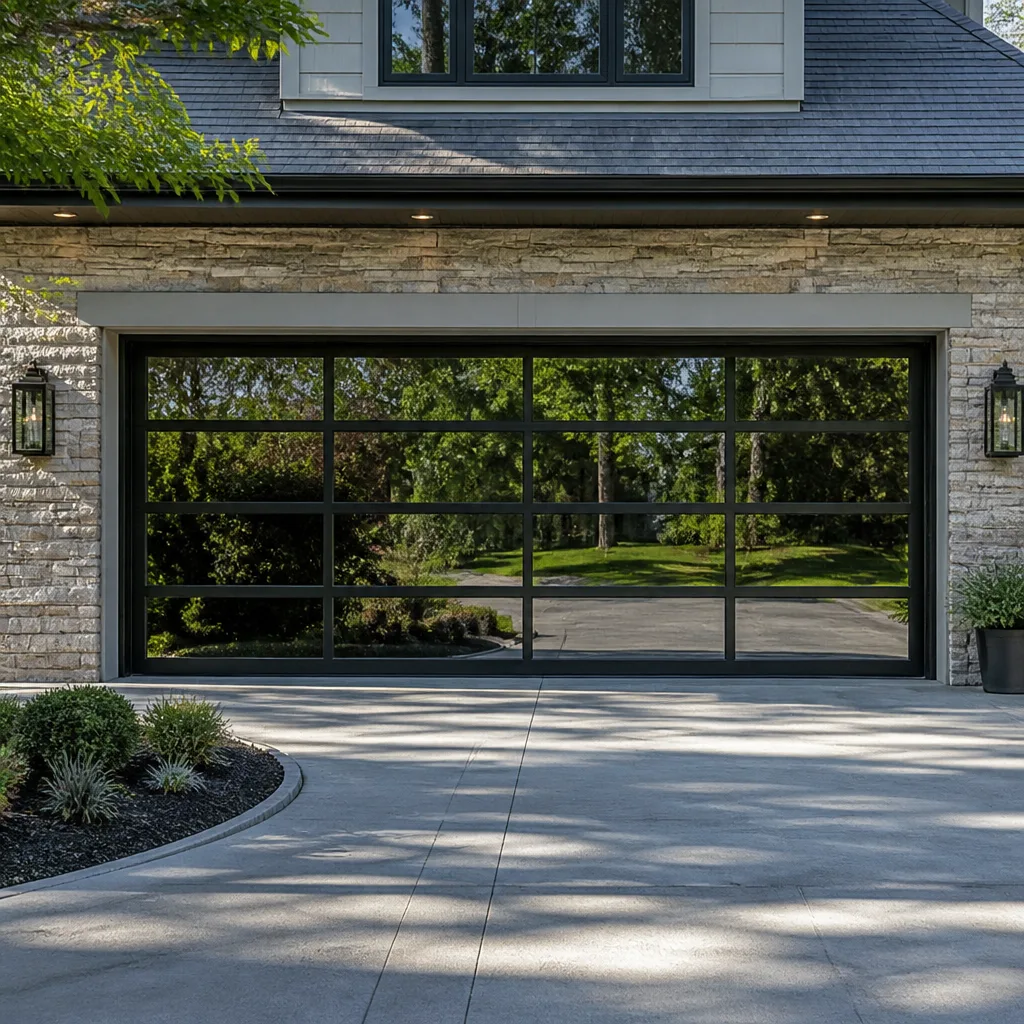 Full-view glass
 LiftMaster openers
 Chamberlain openers
Full 25-point door and opener safety check with every visit - springs, cables, rollers, tracks, and your LiftMaster or Chamberlain opener included
You get a price before we start. It does not change when the pro arrives.
Get your free estimateSeasonal Garage Door Care for Bensonhurst: Year-Round Homeowner’s Guide
Most homeowners assume a garage door fails because of age or a bad opener. In our experience around Bensonhurst, the truth is stranger and more useful: the part that quits first is usually decided by the calendar, not the odometer. The calls that spike in February rarely come from heavy snow. They come from road salt carried off Bay Parkway on tires and boots, settling on the bottom bracket bolts that anchor the spring cable, quietly corroding the hardware nobody looks at until the door stops moving. The season did the damage; the homeowner just found out about it. This guide walks you through what each Bensonhurst season does to a different part of your door, how to spot trouble before it becomes an emergency call, and the single 20-minute routine that catches most problems while they’re still cheap to fix.
Quick Answer
Garage doors in Bensonhurst need a different check each season: clear leaf and debris from the tracks in fall, rinse road salt off the bottom hardware in winter, test the balance and limit settings after freeze-thaw in spring, and inspect wood panels and jamb framing for humidity damage in summer. A 20-minute walk-around four times a year catches roughly 80% of the problems that turn into emergency calls. Anything involving springs, cables, or the brackets that hold them should be handled by a trained technician.
Styles & brands we work with
- Raised-panel steel
- Carriage house
- Modern flush
- Full-view glass
- LiftMaster openers
- Chamberlain openers
Table of Contents
- Fall: Why Debris Build-Up Hits Bensonhurst’s Tree-Lined Blocks Harder
- Winter: The Road Salt Corrosion Sequence, Step by Step
- Spring: Freeze-Thaw, Heaved Aprons, and Thrown-Off Limit Settings
- Summer: Humidity, Wood Panels, and Older Jamb Framing
- The 20-Minute Seasonal Walk-Around Routine
- Warning Signs by Season: What to Watch For
- Common Mistakes to Avoid
- When to Call a Professional
Fall: Why Debris Build-Up Hits Bensonhurst’s Tree-Lined Blocks Harder
Bensonhurst blocks along Bay Parkway and toward Bath Beach have a lot of mature street trees, and those trees drop right on top of garage doors set close to the sidewalk or back lot. In a neighborhood where driveways often run tight to a lot line and trees lean over the door opening, leaves, seed pods, and small twigs land on the top rail and sift down into the vertical tracks. That’s the difference here: this isn’t open suburban debris blowing in from a field, it’s concentrated leaf-fall funneled into a narrow track by buildings and fences on both sides. Once leaf litter is inside the track, the rollers can’t roll freely, the door drags, and the opener strains to push through the friction.
Why the track matters more than the leaf pile
A leaf pile on the ground is cosmetic. Leaf material packed inside the vertical or horizontal track is mechanical. When rollers hit that debris, they flatten a spot on their own bearing surface, and that flat spot develops into a chatter or a bind within a few weeks. Left long enough, the opener’s logic board senses excessive force and reverses the door mid-cycle. On a LiftMaster or Craftsman opener, this often shows up as the door going down partway and then returning to the top – a symptom homeowners misread as a sensor problem when the real cause is debris in the track.
How to clear debris without bending the rail
- Lower the door fully so the spring tension is at rest and the tracks are easiest to reach.
- Use a stiff hand brush or a shop vacuum with a crevice tool to lift leaves and grit out of the track channel. Never use a screwdriver or knife blade – a gouge in the rail creates a permanent snag point.
- Wipe the inside of the track with a dry cloth, then a lightly damp cloth, and dry it again.
- Check that the rollers still roll smoothly when you push the door by hand (with the opener disconnected).
- Clear leaves off the top rail and out of the gap above the door panel, where they collect and hold moisture.
If your track is already pitted or bent from years of debris and rollers dragging through it, no amount of cleaning will fix the binding. That’s when it’s worth calling for a proper garage door repair assessment before the cold sets in.
Winter: The Road Salt Corrosion Sequence, Step by Step
Winter in Bensonhurst brings the specific problem of road salt drift: salt applied on Bay Parkway and nearby commercial streets gets tracked onto driveways, curbs, and into the gap under the bottom of the door. That salt doesn’t just sit there; combined with snowmelt and rain, it forms a brine that works into every opening in the door’s metal hardware. What makes this sequence worth understanding is that it proceeds in a predictable order. Knowing which piece fails first, second, and third lets you look at the right part before it lets go.
The corrosion sequence
- First to fail: the bottom bracket bolts and the bracket itself. These sit lowest, get the most salt exposure, and often use plated hardware that corrodes faster than the door’s painted steel. When the bottom bracket bolts seize or rust through, the cable tension anchor becomes the weak point – and that’s a safety issue, not a convenience one.
- Second: the bottom seal and the steel retainer behind it. The rubber seal holds salt-laden water against the metal retainer strip. The seal stiffens and cracks, then the retainer rusts from the inside out. You’ll notice a draft, water on the floor, and daylight under the door.
- Third: hinge plates and roller stems. Salt mist carried on the door as it opens and closes settles on the hinges. The hinges stiffen, the door gets louder, and the rollers stop turning freely. On a Wayne Dalton door with its proprietary hinge geometry, a stiff hinge can put more load on the panel than the panel was designed for.
What you can do without touching the spring system
After any significant snow or salt event, rinse the bottom of the door and the concrete apron with plain water and dry it. Wipe down the hinge plates with a cloth, and apply a garage-door-specific lubricant (not household oil, which attracts grit). Do not lubricate the springs or cables themselves – they should stay dry. And do not try to loosen or inspect the bottom bracket bolts yourself. That bracket anchors a live spring cable under heavy tension, and a slip there can cause serious injury. This is exactly the reason we treat spring and cable hardware as a specialist job, not a homeowner task.
If you’ve got rust visible at the bracket or the seal is failing, it’s worth getting ahead of it – garage door repair Bensonhurst handles the bracket and cable side of this safely.
Spring: Freeze-Thaw, Heaved Aprons, and Thrown-Off Limit Settings
When the ground finally thaws in spring, Bensonhurst’s older concrete driveways and garage aprons do something subtle: they heave. Repeated freezing and thawing of wet soil beneath the slab lifts and settles the concrete unevenly, and a slab that was perfectly level in November can have a raised lip or a dip by April. That slab movement throws off two things at once – the opener’s travel limit settings and the bottom seal’s contact with the floor. Neither shows up as a dramatic failure. Both create gradual wear that leads to one.
What freeze-thaw actually breaks
- Limit settings: The opener was set to stop when the door met the floor on the old apron. If the slab heaved up, the door now hits the floor before the opener expects it – or, on the way up, the opener may think the door has reached the top before it has. This is most obvious on Genie and LiftMaster openers, where the door reverses at floor level or stops short at the top.
- Bottom seal contact: A seal that was snug in fall now gaps at one corner or the middle. Water and road grit get under the door. In a rainy spring, that means moisture against the bottom panel and the bottom bracket – the same hardware already weakened by winter salt.
- Track alignment: A heaved track, even a fraction of an inch, can make the door bind in one direction.
Spring checklist for the homeowner
- Disconnect the opener (pull the release cord) and lift the door halfway by hand. It should stay put. If it drops or rises, the spring balance is off and a technician should look at it.
- Run the opener through a full open-and-close cycle and watch the floor line. If the door hits and reverses, or stops before the floor, the limit setting needs adjustment.
- Shine a flashlight under the closed door from inside. Any daylight means the seal isn’t making contact, which usually means the apron or the seal has shifted.
- Look along the concrete apron for a raised edge or a dip. If the apron has moved, note it so the technician knows.
- Do not attempt to adjust the limit settings or the springs yourself. Both are technician work, and one of them is genuinely dangerous.
If the door is out of balance or the opener’s limits are jumping, that’s exactly the sort of thing a professional garage door opener repair visit sorts out quickly.
Summer: Humidity, Wood Panels, and Older Jamb Framing
Summer humidity in Bensonhurst is the season most homeowners ignore, and it’s the one that quietly ages a wood door. Much of the older housing stock here has wood garage door panels and wooden jamb framing around the opening. Wood moves with moisture – it swells in humid July air, shrinks when the air dries in fall, and swells again next summer. Over several years of that cycle, the wood at the bottom and around the frame takes on water, the paint film cracks, and the seams around the jamb open up. That’s when you see soft spots, splitting, and panels that no longer fit the frame squarely.
Humidity’s slow effects
- Wood panels: Swelling causes the panels to bind in the tracks or the seams to open. Paint that was tight in spring can blister by August if moisture gets behind it.
- Wooden jamb framing: The jamb is the frame around the opening, not the door itself. It’s often the first place to show water damage – soft wood at the bottom corners, a miter joint that’s opened, or paint that’s peeling in strips.
- Metal hardware: Humidity alone won’t rust a well-painted door, but it accelerates corrosion on any spot the winter salt already compromised. Hinges and brackets that showed light rust in spring get worse in a humid summer.
- Seals: Rubber seals soften and can stick to the floor in heat. If the door lifts and the seal drags, you’re pulling the seal off the bottom of the door over time.
Summer maintenance checklist
- Look at the bottom corners of the wooden jamb. Probe gently with a screwdriver tip. If it sinks into the wood easily, the wood is soft and needs attention before it spreads.
- Check paint on the door panels, especially around the bottom edge. Any cracked or blistered paint is a place for moisture to enter.
- Look for gaps at the jamb seams. A gap that wasn’t there last summer means the frame has moved or shrunk.
- Wipe the rubber seal clean and check that it hasn’t stuck to the floor. If it has, the door is usually sitting too low, which can be a limit setting issue.
- If you have a wood door that’s more than a few years old, a professional inspection before fall is worth it. Wood damage that’s caught early can be repainted and sealed. Wood damage that’s ignored becomes a panel or frame replacement.
If your wood door or jamb has gone soft, a garage door installation may be the more economical path than piecemeal repair, depending on how far the damage has spread.
The 20-Minute Seasonal Walk-Around Routine
Here’s the routine we recommend to Bensonhurst homeowners who want to catch problems before they turn into emergency calls. It’s the same four checks in every season, with minor seasonal additions. Twenty minutes, once every three months, at the change of seasons. It catches most of what we see on service calls before it gets expensive.
The four core checks
- Visual scan (5 minutes). Walk the full door on both sides. Look at the tracks for debris, the hinges for rust, the seal for gaps, and the bottom bracket for any corrosion. Look for daylight under the door and along the jambs. This catches the obvious.
- Balance test (3 minutes). Disconnect the opener and lift the door halfway by hand. It should stay in place with very little force. If it falls, rises, or feels heavy, that’s a spring balance issue – stop and call a technician.
- Listen (2 minutes). Run the opener through a full cycle and just listen. A door that’s suddenly louder, grinding, or banging is telling you something. The noise usually points to a specific part: a grinding in the track is a roller or debris, a bang at the bottom is the seal or the apron, a rattle from the opener is a loose bracket.
- Lubricate and wipe (10 minutes). Wipe down the hinge plates and roller stems, apply a garage-door lubricant to the hinges and rollers only, and clean the tracks. Never lubricate the springs or the cables. Never try to loosen or tighten the bottom bracket or the spring anchor hardware.
Seasonal add-ons
- Fall: Add a full track-cleaning with a brush and vacuum, and clear leaves from above the door panel.
- Winter: After each salt event, rinse the bottom of the door and the apron. Wipe the hinges.
- Spring: Add the balance test and the limit-setting observation. Watch the door meet the floor.
- Summer: Add a probe of the wooden jamb corners and a paint check on wood panels.
That’s the whole routine. The doors that make it years without a serious failure aren’t the ones with the best hardware – they’re the ones whose owners did these four checks four times a year. If anything in the balance test or the listen step feels off, that’s your cue to get a professional eye on it early, not to wait for the door to fail.
Warning Signs by Season: What to Watch For
Each season produces a recognizable set of warning signs, and they map to the components we described earlier. This is a reference list you can pin to the wall of the garage. If you see one of these, it points to a specific part and a specific fix.
Fall warning signs
- Door moves slower or feels heavy when you lift it by hand
- Track has visible grit or leaf litter inside
- Opener reverses the door mid-descent without an obstruction
- Roller chatter or a squeaking sound as the door travels
Winter warning signs
- Rust visible at the bottom bracket or along the bottom of the panel
- Hinges squeak or bind (they’ve stopped pivoting freely)
- Seal cracking, stiff, or showing daylight
- The door feels louder than it was in fall
Spring warning signs
- Door drops or rises when lifted halfway by hand (spring balance issue)
- Door reverses at the floor or stops short of the top (limit settings)
- Daylight under the door after it closes
- Visible lip or dip in the concrete apron
Summer warning signs
- Soft wood at the bottom corners of the jamb
- Paint blistered or peeling on wood panels, especially at the bottom
- Seal sticking to the floor or dragging
- Gaps opening at the jamb seams
Some of these signs – debris in the track, daylight under the door – are homeowner fixes. Others, like spring balance issues or a reverse at the floor, need a technician. When in doubt about which category a sign falls into, treat it as a technician issue and get a free estimate. The cost of a short service visit is a small fraction of what a failed spring or a door that comes off track can cost later. We’ve seen Raynor systems in particular go out of balance quietly and give no warning beyond a slightly harder lift, so the balance test is the one not to skip.
Common Mistakes to Avoid
- Lubricating the springs or cables. Springs should stay dry and unlubricated. Oil attracts grit and holds it in the spring coils, which shortens the spring’s working life and can hide a failing coil until it snaps. Lubricate hinges and rollers only.
- Using a screwdriver to clear the track. Every Bensonhurst homeowner with a leaf-filled track has done this at least once. A metal blade against the track wall gouges the rail, and that gouge becomes a permanent snag point for every roller that passes it.
- Adjusting the opener’s limit settings without checking the apron. If the concrete has heaved since last season, tweaking the limits to “make the door close” just masks the real problem. The door hits a raised apron on one side and the openers on the market – and we’ve seen this on LiftMaster and Craftsman systems especially – will keep reversing until the door or the track is dealt with.
- Ignoring the bottom bracket bolts during a winter rinse. People rinse the door in winter and stop at the bottom panel. The bracket bolts are the whole reason to do the rinse. Wiping the visible panel while leaving the bracket untouched doesn’t address the failing hardware at all.
- Painting a wood door in summer without checking the jamb. A fresh coat of paint on a humid summer day over soft jamb wood traps moisture inside. The paint blisters within a season or two, and the wood under it gets worse. Deal with the wood before you paint.
- Treating a balance issue as a “wait and see”. A door that doesn’t hold position when lifted halfway is telling you the spring is tired. Waiting a few months to “see if it gets worse” is how a spring snaps at the wrong time. Get it looked at.
- Skipping the seasonal check because “nothing’s wrong”. The whole point of seasons-based maintenance is that the failures are seasonal. You’re not checking because something’s wrong; you’re checking because the calendar has moved the salt, the leaves, or the humidity to a new part of the door.
When to Call a Professional
Some seasonal maintenance you can do yourself. Some you absolutely cannot. Call a professional for anything involving the springs, the cables, the bottom bracket, or the opener’s internal logic. Call immediately if the door won’t open or close, if you can see daylight through a gap that wasn’t there before, if the door comes off the track, or if it makes a sound that’s new and louder than before. A door that won’t close is a security issue for a home with a garage opening to the street – and that’s the sort of situation where getting someone out quickly matters. On the spring and cable side, the danger is real: a failed spring or cable carries stored energy that can cause serious injury, and no homeowner should be working on it.
Garage Door Repair Bensonhurst offers free estimates in Bensonhurst and works on the door and the opener as one specialty, so you’re not coordinating two companies. We’re brand-familiar with the systems most common on Bensonhurst doors – LiftMaster, Chamberlain, Genie, Clopay, Amarr, Wayne Dalton, Craftsman, and Raynor – so the parts that come out match the parts we put back. One call covers the whole job. Call (833) 508-9946 for a free estimate.
See the difference
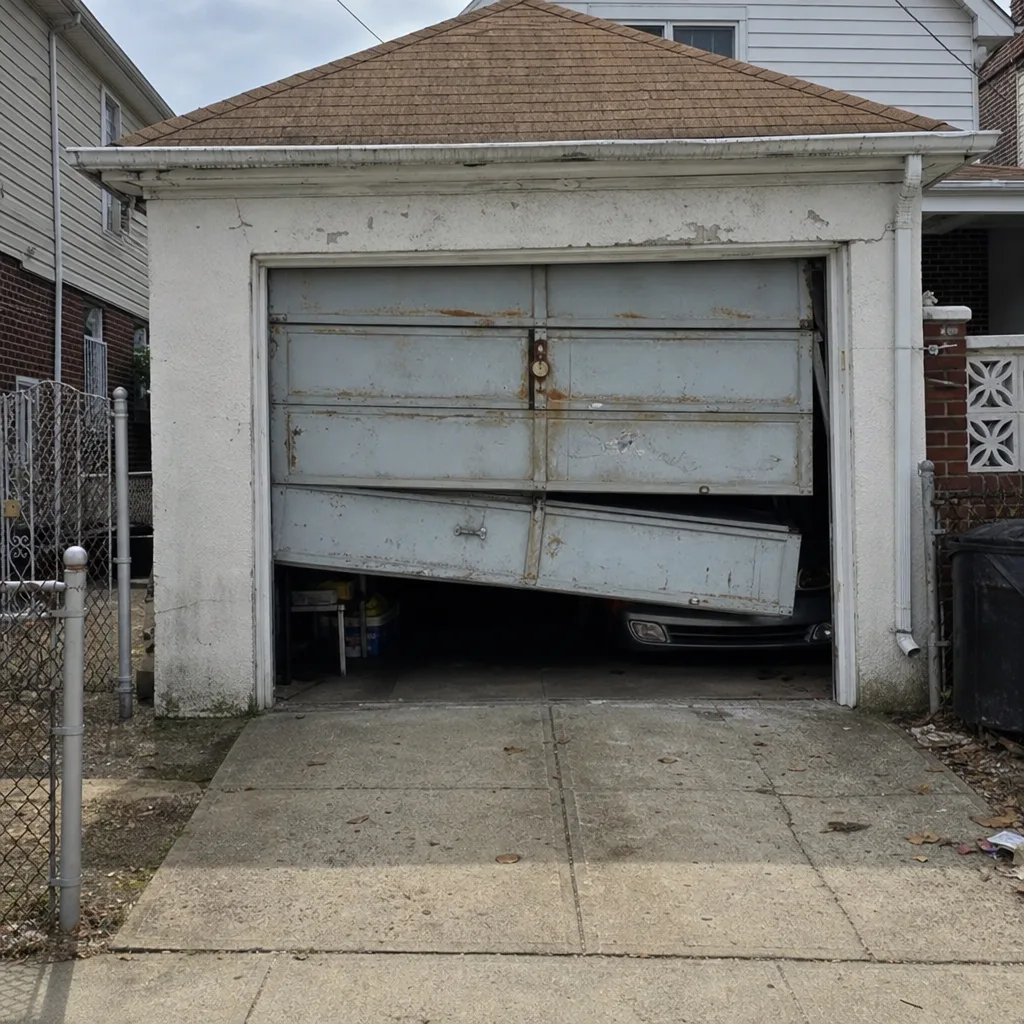 Before
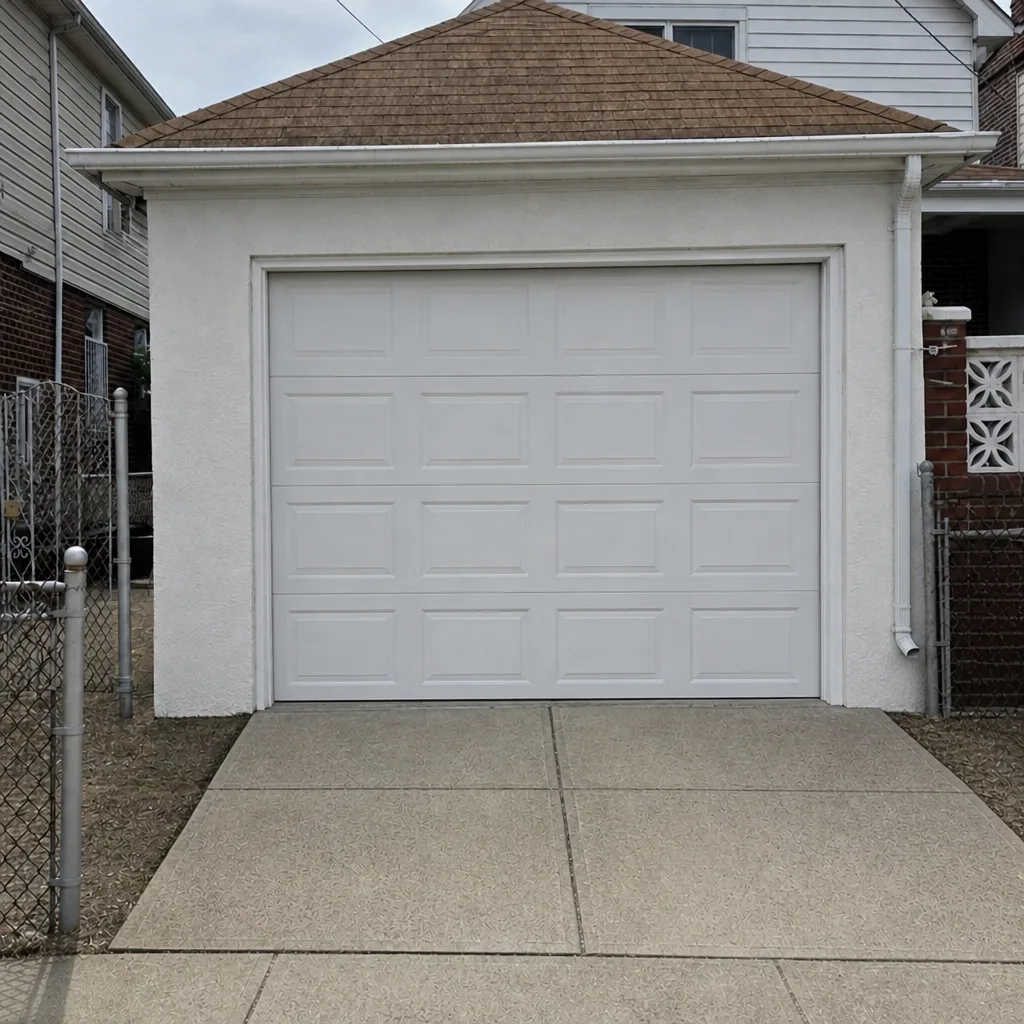 After
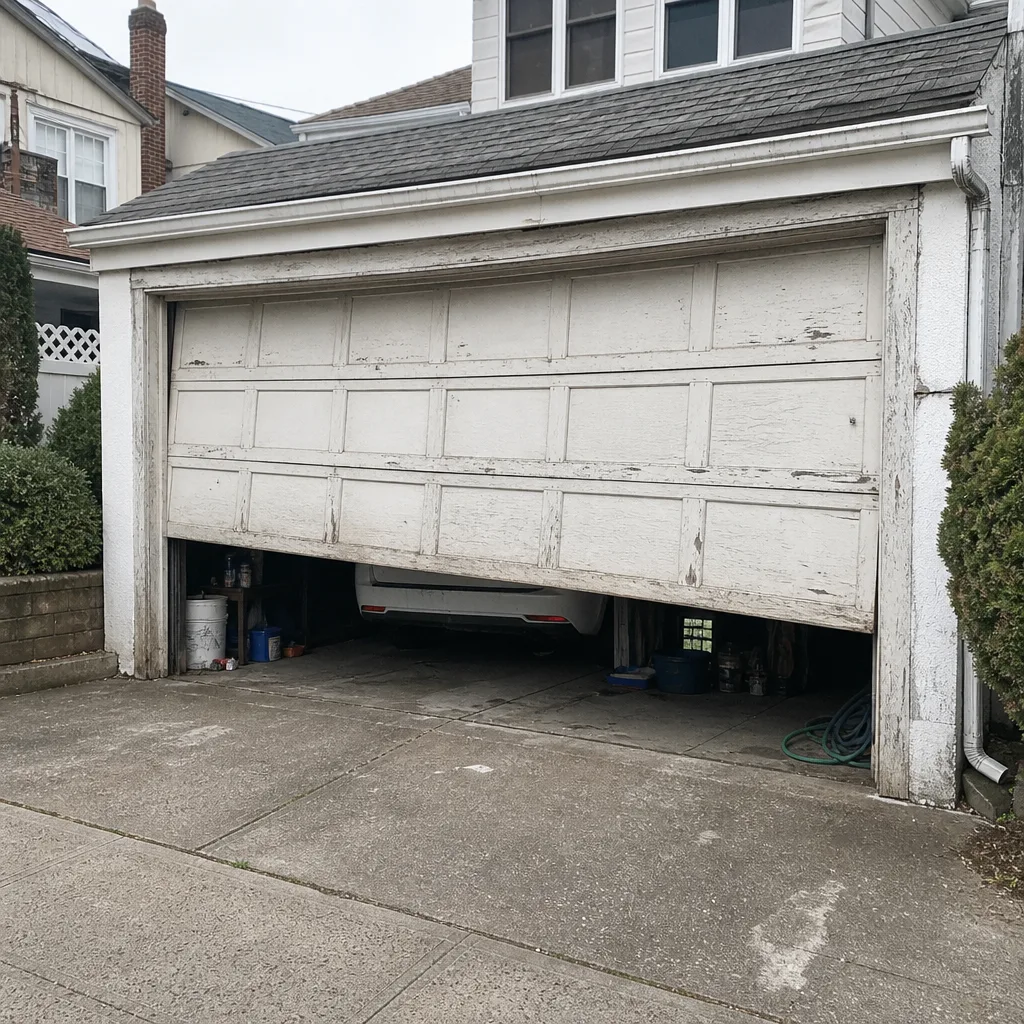 Before
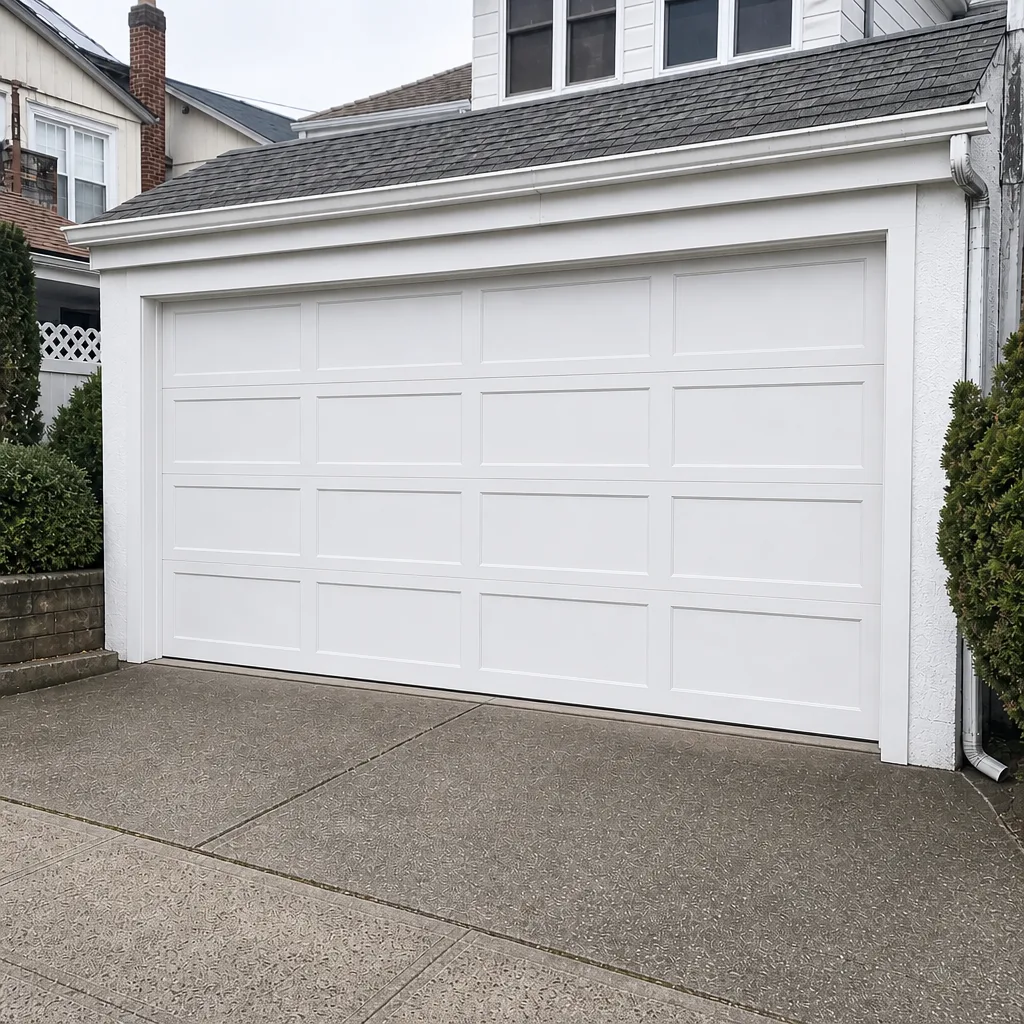 After
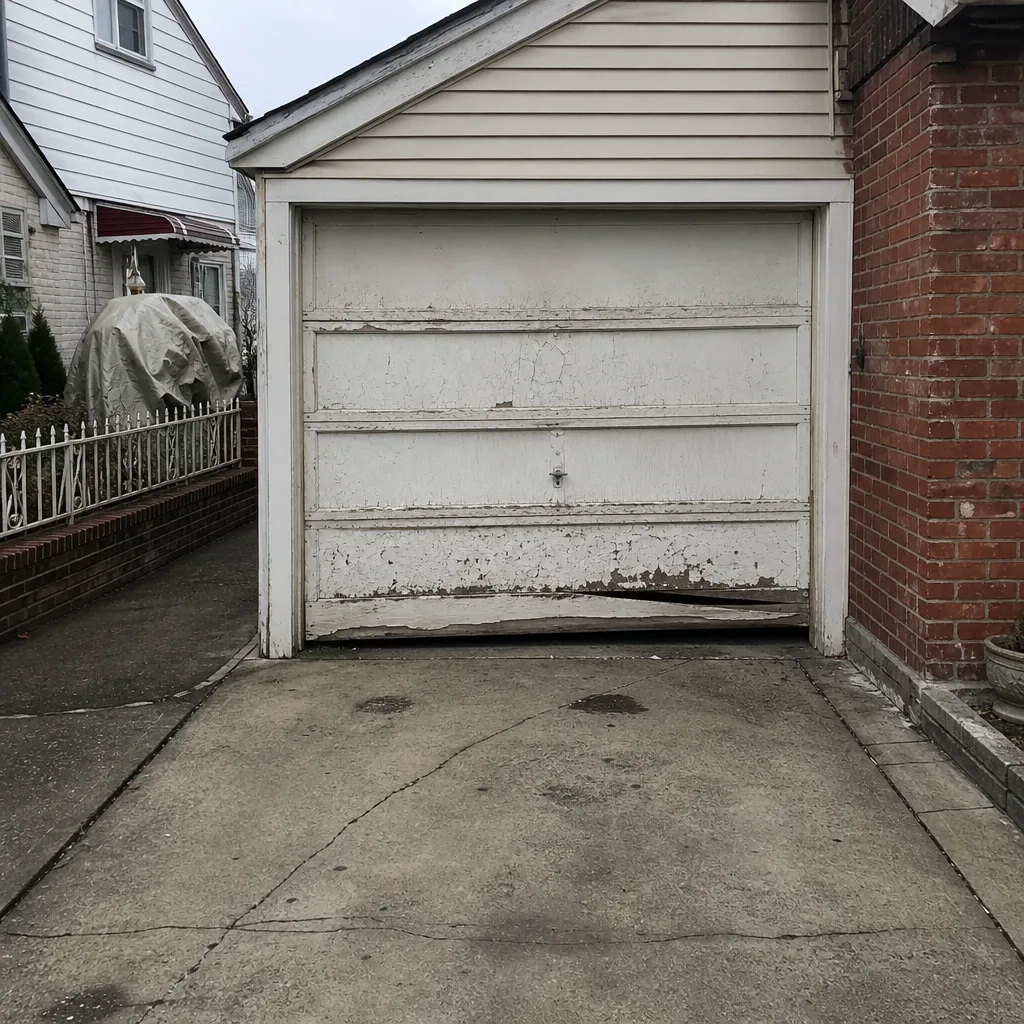 Before
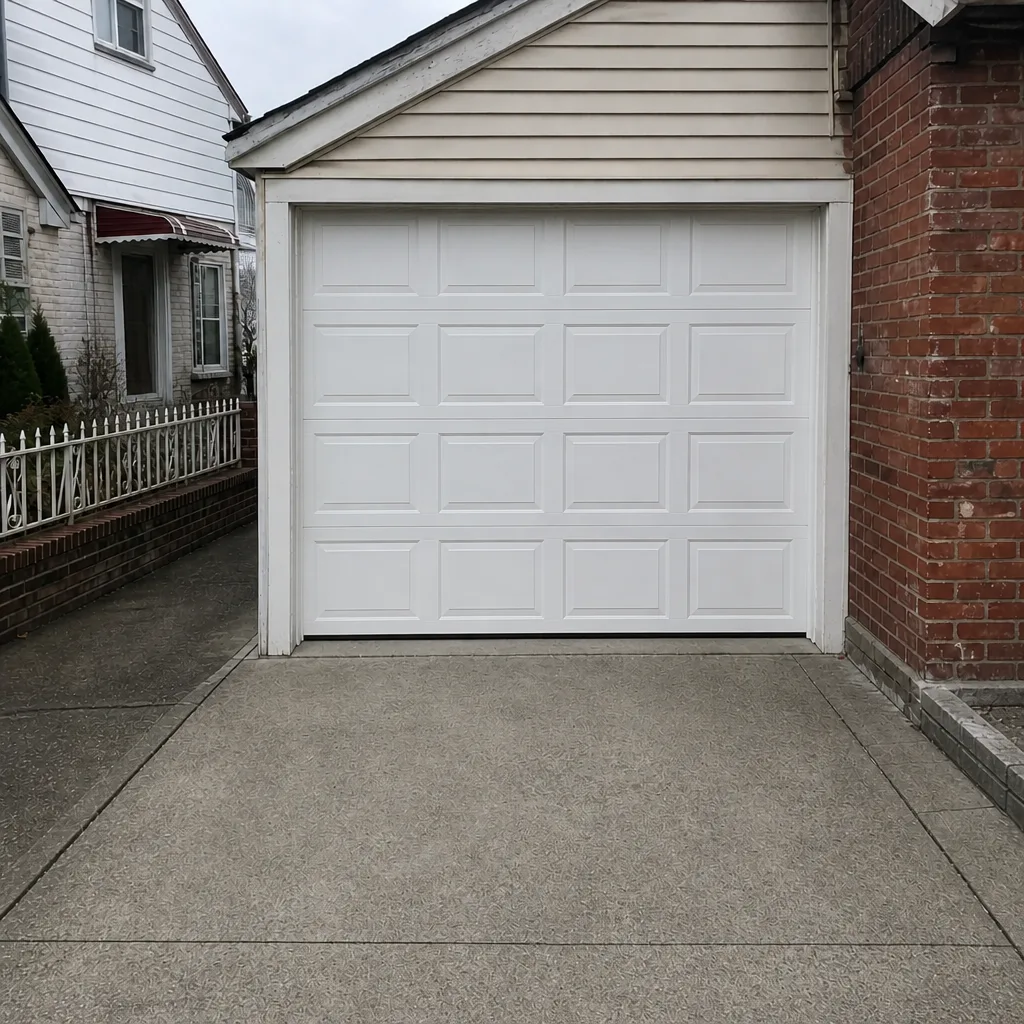 After
Frequently Asked Questions
Four times a year, at the change of each season, with the 20-minute routine in this guide. Bensonhurst’s cold winters, humid summers, and heavy street tree canopy each hit a different part of the door, so a single annual check leaves two seasons’ worth of wear unaddressed. Call (833) 508-9946 for a free estimate if you’d rather have a professional do the seasonal check.
Because road salt drift from Bay Parkway and nearby streets settles on the bottom bracket bolts and corrodes the hardware that anchors the spring cable. The bottom bracket is the lowest and most-exposed piece of hardware on the door, and it’s the first to fail after repeated salt exposure. The seal and the hinges follow. Wiping down the bottom of the door after a salt event is the single most useful winter habit you can build.
Yes, with a stiff hand brush or a shop vacuum, never with a screwdriver or knife. Metal tools gouge the track, and a gouge becomes a permanent snag point for the rollers. Clear the leaves, wipe the track dry, and check that the rollers still turn freely by hand. Call (833) 508-9946 for a free estimate if the door still binds after cleaning – that’s usually a roller or track alignment issue a professional should look at.
Most likely the concrete apron heaved during freeze-thaw and the opener’s limit settings are now out of step with the new floor line. The door hits the raised slab or a dip before the opener expects it, and the opener reverses as a safety response. This is common on LiftMaster and Craftsman openers. The fix is a limit setting adjustment, and the cause (the apron) should be assessed too. Call (833) 508-9946 for a free estimate.
Yes, if your door has wood panels or wooden jamb framing – and a lot of older Bensonhurst construction does. Wood swells in humid summer air, shrinks in the fall, and repeats the cycle year after year. The damage shows up first at the bottom corners of the jamb and along the paint film on the panels. Probe the jamb corners with a screwdriver tip; if it sinks in easily, the wood is soft and should be addressed before it spreads. Call (833) 508-9946 for a free estimate.
No. Garage door springs and cables store enough energy to cause serious injury, and the bottom bracket that anchors the cable is one of the most dangerous pieces of hardware on the door. Even an experienced homeowner should not attempt spring, cable, or bottom bracket work. Our technicians have up to 12 years of experience with this exact job. Call (833) 508-9946 for a free estimate – spring work is a specialty, not an add-on.
The Bottom Line
Bensonhurst’s compressed seasonal extremes – fall debris off street trees, winter road salt drift, spring freeze-thaw heave, summer humidity – each attack a different part of the garage door in a predictable order. Knowing which part the season is hitting is what prevents the wrong fix, and the wrong fix is what turns a small adjustment into an emergency call. Do the 20-minute walk-around four times a year. Watch for the seasonal warning signs. Never touch the springs, cables, or bottom bracket. If a sign points to a component you shouldn’t work on yourself, call us. Our technicians have up to 12 years of experience, and we treat spring repair as the core specialty it is. Call (833) 508-9946 for a free estimate.
Written by the team at Garage Door Repair Bensonhurst.