Last updated November 21, 2026
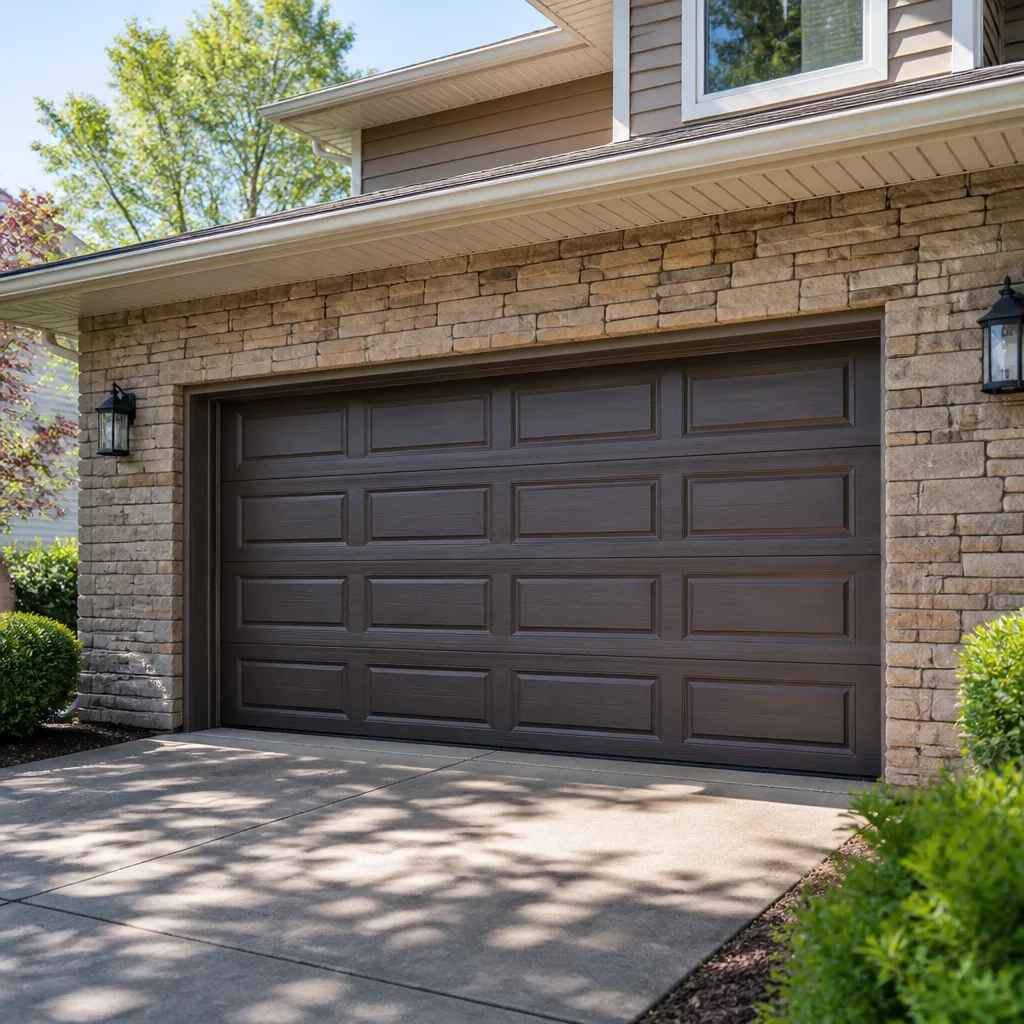 Raised-panel steel
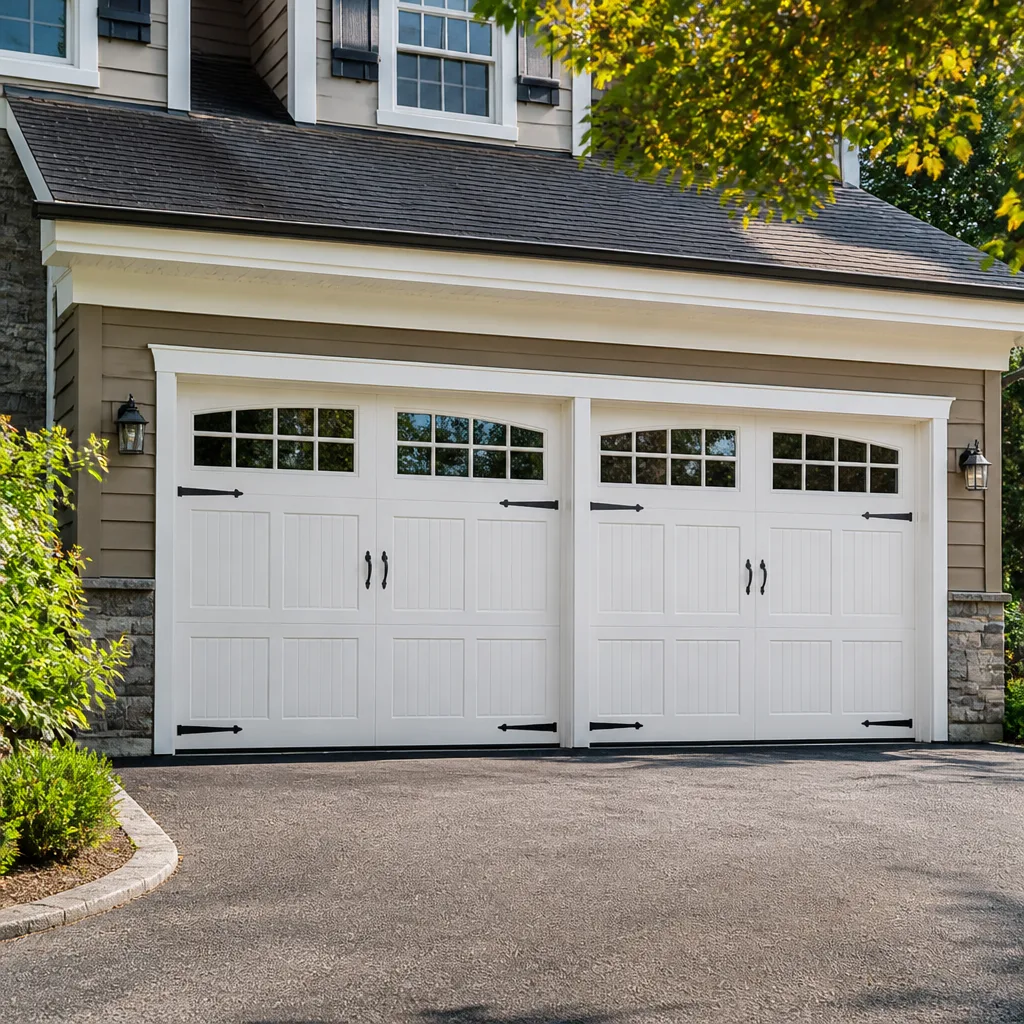 Carriage house
 Modern flush
 Full-view glass
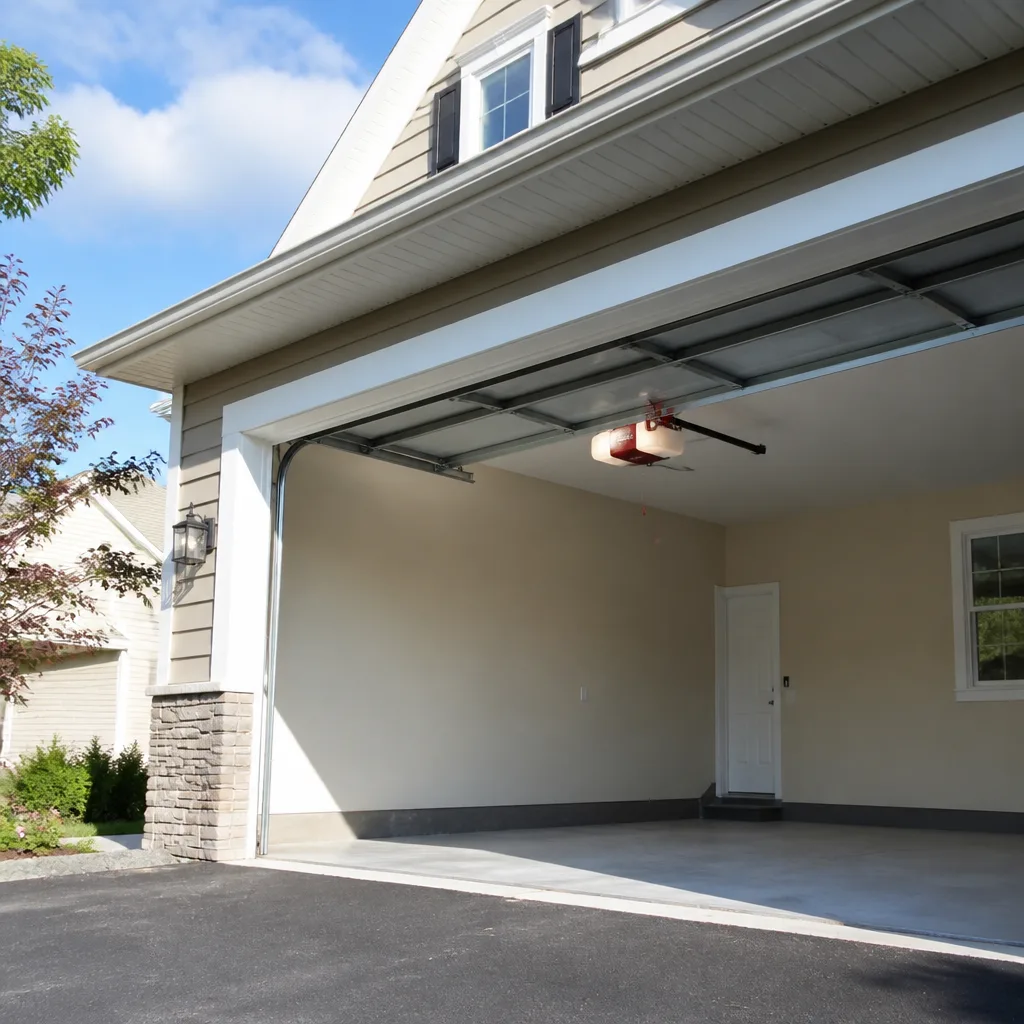 LiftMaster openers
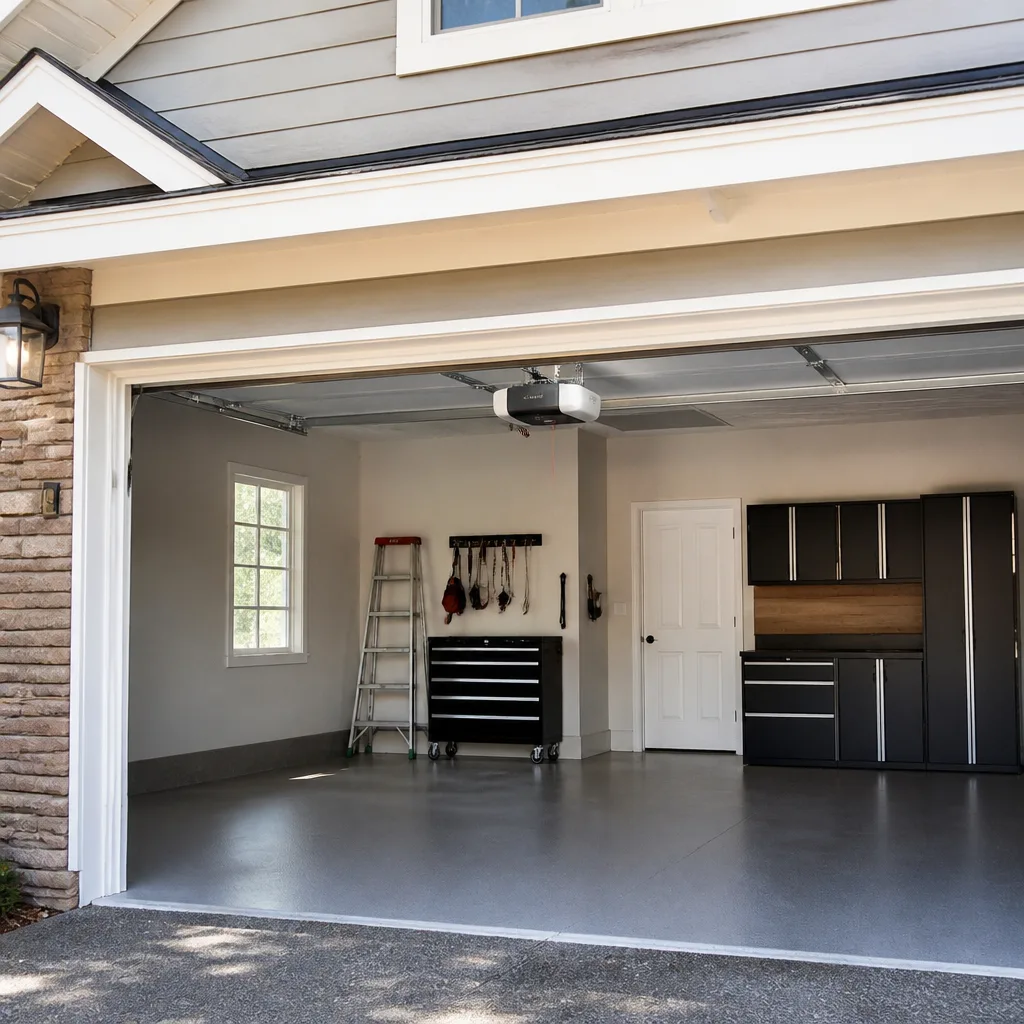 Chamberlain openers
Full 25-point door and opener safety check with every visit - springs, cables, rollers, tracks, and your LiftMaster or Chamberlain opener included
You get a price before we start. It does not change when the pro arrives.
Get your free estimateDIY vs Professional Garage Door: The Bensonhurst Homeowner’s Decision Guide
Most homeowners assume the DIY-versus-professional question is about skill. It isn’t. Plenty of Bensonhurst homeowners can rewire a light fixture or patch a water line, and plenty of those same people assume a garage door is just a bigger version of the same job. The difference is energy. A torsion spring under tension stores enough force to cause a fatality when it releases unexpectedly, and that’s not a scare tactic or a metaphor. It’s a recognized injury category, one that emergency rooms see from people who watched a video and felt ready. That single fact changes the math for garage doors in a way it never does for a leaky faucet or a squeaky hinge.
This guide draws a clear line between what a mechanically capable homeowner can safely do and what genuinely requires trained hands. You’ll get a task-by-task breakdown, an honest cost comparison that counts the tools you’d have to buy, the specific liability angle for New York City homeowners, and a hybrid approach most people never consider. We work on garage doors across Bensonhurst every day, and this is the conversation we have with neighbors constantly.
Quick Answer
Safe DIY garage door tasks in Bensonhurst are limited to weatherstripping, safety sensor alignment, lubrication, and minor track adjustment. Springs, cables, bottom brackets, and opener motor internals should always go to a trained technician because a sudden release of stored tension can cause severe injury, and a DIY structural change can complicate your homeowner’s insurance coverage. For anything involving stored energy or the opener’s electrical components, the professional call is cheaper than the risk.
Styles & brands we work with
- Raised-panel steel
- Carriage house
- Modern flush
- Full-view glass
- LiftMaster openers
- Chamberlain openers
Table of Contents
- Where the DIY Line Actually Falls
- Five Garage Door Jobs a Homeowner Can Safely Do
- The Jobs That Require a Professional
- DIY vs Professional: The Real Cost Comparison
- The NYC Liability Angle Homeowners Miss
- How to Use Manufacturer Videos Honestly
- The Hybrid Approach That Saves Money
- When to Stop and Call
Where the DIY Line Actually Falls
The garage door is a system under constant tension, balanced by springs so a person can lift a panel that weighs well over a hundred pounds. When that balance holds, everything feels light and easy. When it fails, the door becomes a falling weight or the spring becomes a projectile, and the failure happens in a fraction of a second with no warning.
There are three kinds of garage door work, and only one of them belongs to the homeowner:
- Low-risk, low-energy tasks: weatherstripping, sensor alignment, lubrication, and tightening accessible hardware with hand tools. These involve no stored energy and no electrical hazard.
- High-energy mechanical tasks: torsion springs, extension springs, cables, drums, and bottom brackets. These hold and release dangerous force and require specific tools and controlled procedures.
- Electrical and control tasks: opener motor internals, circuit boards, and wiring. These carry shock risk plus the chance of a door that reverses or closes unexpectedly if the safety system is disturbed.
The first category is yours if you’re reasonably handy. The second two are where the DIY calculus breaks down completely. A homeowner in Bensonhurst with a set of wrenches can absolutely handle the first list. What no homeowner should attempt is a job that turns a broken door into an injury, which is why we treat spring repair as a core specialty rather than an add-on. The energy stored in a wound torsion spring doesn’t care how careful you are.
Five Garage Door Jobs a Homeowner Can Safely Do
These tasks involve no stored spring tension and no electrical disassembly. If you have basic tools and a reasonable comfort with home maintenance, they’re within reach.
- Replace weatherstripping. The rubber seal along the bottom of the door and the brush or vinyl on the sides wears out from normal use. A new seal improves the fit, cuts drafts, and keeps pests and water out. It’s a straightforward swap on most doors.
- Align the safety sensors. The two sensors near the floor on either side of the door need to see each other. If the door closes partway and reverses, they’re usually out of alignment or have a dirty lens. Wipe them clean and nudge them until the control unit’s indicator light settles.
- Lubricate the moving parts. Hinges, rollers, and the torsion bar bearings benefit from a garage door lubricant a couple of times a year. This quiet operation and slows wear. Don’t spray the springs’ coils or the track surface itself.
- Test the safety reverse. Put a thick object in the door’s path and confirm it reverses on contact. This is the single most important safety check you can do, and it’s free.
- Tighten loose hardware. Bolts on the hinges and brackets work loose over time. A wrench and a few minutes are all this takes. Stop if anything feels like it’s under spring load.
Minor track adjustment can be safe too, if a track is slightly bowed and the door is fully up with the opener disconnected. If a track is visibly bent or the door binds hard against it, that’s not a minor adjustment; that’s a sign the panels or cables are out of alignment, and it needs eyes that know the difference. For straightforward fixes, Garage Door Repair Bensonhurst covers the same ground. Knowing when to stop is part of the safety check.
The Jobs That Require a Professional
Here’s the definitive list of what should never be a homeowner project. Each item carries either stored mechanical energy or an electrical hazard that no tutorial removes.
Springs, cables, drums, and bottom brackets
Torsion springs and extension springs hold the entire weight of the door. Cables run under extreme tension and are anchored to bottom brackets that can whip free. Any work on these components requires winding bars, controlled procedures, and the knowledge that comes from doing it constantly. We replace springs safely because it’s our specialty, not because it’s fun. It’s dangerous work that demands respect.
Opener motor internals and control boards
Opening the motor housing means working around capacitors that hold a charge even after power is off. Beyond the shock risk, a control board swap on a LiftMaster, Chamberlain, or Genie unit has to match the specific model’s logic or the safety reverse can fail. Brand familiarity matters here because proprietary parts and error codes differ between manufacturers.
Any structural modification
Cutting a header, reframing an opening, or relocating the mounting points changes how the door is supported. That’s structural work and belongs to a professional who understands load and code.
When we look at a garage door, the first thing we do is diagnosis: what’s actually broken, what’s worn, and what can wait. Then we lay out options. Sometimes that’s a cheap fix you don’t need us for. If the door is past repair and you’re weighing a replacement, garage door installation starts with a free measurement and a written price, never a same-day promise. Installation is measured and scheduled, not rushed.
DIY vs Professional: The Real Cost Comparison
The honest argument for DIY assumes the tools are already in your garage. They usually aren’t. The real comparison includes equipment, the risk of a failed attempt, and the second call you make if the first attempt goes sideways.
- Weatherstripping: materials cost less than a pro call. DIY wins clearly here.
- Sensor alignment: free. DIY wins.
- Lubrication and tightening: a lubricant and a wrench, under most pro call minimums. DIY wins.
- Spring replacement: the proper winding bars and knowledge outweigh the savings, plus the injury risk dwarfs the price difference. Professional wins decisively.
- Opener repair: if the problem is a board or motor, buying a replacement unit to test against is a loser. Professional wins.
Here’s where DIY breaks even or costs more than a pro call. Buying a specialty tool for a one-time job almost never pays. The winding bars, in particular, are only worthwhile if you’ll do multiple doors, and if you’re doing multiple doors you’re doing dangerous work repeatedly. A failed DIY spring replacement often ends in a bent door, a damaged track, or a call for emergency service, which is exactly the scenario we handle as a stated offering. When homeowners call us after a DIY spring attempt, the repair is almost always larger than the original job would have been.
Use manufacturer videos as a diagnosis tool: watch to understand which part does what and what symptoms a failure produces. What they show well is the logic of the mechanism. What they simplify is the level of force involved and the precise order of safe steps, which is the part that actually matters.
The NYC Liability Angle Homeowners Miss
New York City homeowners carry real exposure when a garage door fails, and it’s larger in dense neighborhoods like Bensonhurst, where doors face alleys, shared driveways, and sidewalks. A poorly repaired door that closes on a delivery person or a neighbor can become a liability claim, and those claims can reach well beyond a repair bill.
The other piece most people don’t consider is insurance. DIY structural modifications, a cut or altered header, reframed opening, or relocated spring anchor, can void coverage or put a claim under scrutiny if the insurer decides the failure traces to unpermitted work. Insurers look at whether the installation was done to standard, and a modification without documentation raises a question. A professional repair or replacement leaves a paper trail an insurance adjuster can work with. That’s worth more than the cost difference on most jobs.
We’re not an insurance company and we don’t give coverage advice. What we can say is that when a local pro is licensed and insured as their state requires, the paper trail exists. If you’re a property manager handling an apartment building or a townhouse row in Bensonhurst, that record matters for the whole building.
How to Use Manufacturer Videos Honestly
A manufacturer’s installation or repair video is a genuinely useful thing. It’s also produced to make the product look approachable. Both facts are true, and knowing which parts are which is how you use them well.
What videos show well: the parts diagram, how a spring winds, how a sensor wires into the opener, and what symptoms indicate which component. If your door reverses partway, the video will help you understand whether the sensor, the logic, or the down-travel setting is the likely culprit. That diagnosis is valuable, and it’s safe.
What videos simplify or skip: the number of turns on a torsion spring, the correct order of shimming and releasing, the difference between a spring at half its rated life and one ready to fail, and the torque required to over-wind a spring. They also rarely show what to do if the winding bars slip. In practice, the risk isn’t in understanding the video; it’s in the gap between understanding and executing under load.
The same gap explains why some models of Wayne Dalton doors use proprietary spring systems that behave differently from a Clopay or Amarr door. A video for one door doesn’t automatically cover yours. Brand-specific knowledge matters, and it’s a big reason we stay fluent across eight widely installed brands so we can recognize a part and a symptom before guessing.
The Hybrid Approach That Saves Money
Most people assume the choice is total DIY or total pro. The better path is often a hybrid: you handle the low-risk work and the diagnosis, and a specialist handles the high-energy components. This can cut your bill meaningfully without ever touching a spring.
- Do the diagnostics. Note what the door does and when. Does it reverse partway, sound loud on one side, or feel heavy at the bottom? Write it down.
- Do the prep work. Clear the opening, disconnect the opener if you’re doing the visible adjustments, clean the sensors, and make sure the door’s path is unobstructed.
- Do the safe maintenance. Lubricate, tighten, replace weatherstripping, confirm the safety reverse. This is work you can do well.
- Hand off the dangerous components. Springs, cables, brackets, and motor internals go to a specialist who has the tools and the training.
- Get a written price first. We quote and agree the price before any work begins. The written estimate sets the final cost.
This approach is the one we recommend constantly to homeowners in Bensonhurst, and it’s why we stress brand-specific service. If your opener is a Craftsman or a Raynor, we know the error codes and the failure points without guesswork. The door and the opener are two separate specialties, and a customer shouldn’t need two companies. garage door repair covers the mechanical side while garage door opener repair handles the electrical, and a single specialist can coordinate both.
When to Call a Professional
Call a professional the moment a job involves a spring, a cable, a bottom bracket, or the inside of the opener. Call us if your door reverses partway and sensor cleaning doesn’t fix it, if the door feels heavy lifting by hand, if you hear a loud snap from the spring area, or if a car is stuck under a partially open door. Those are all situations where the professional on this page is faster and safer than a video.
Our technicians have up to 12 years of experience, and they handle these jobs in Bensonhurst regularly. We offer free estimates and upfront pricing, with same-day response and fast dispatch from 7am to 7pm. If you’re not sure whether your issue is DIY-safe, call and ask. Diagnosis first, then options. Call (833) 508-9946 and we’ll help you sort the safe work from the dangerous work.
See the difference
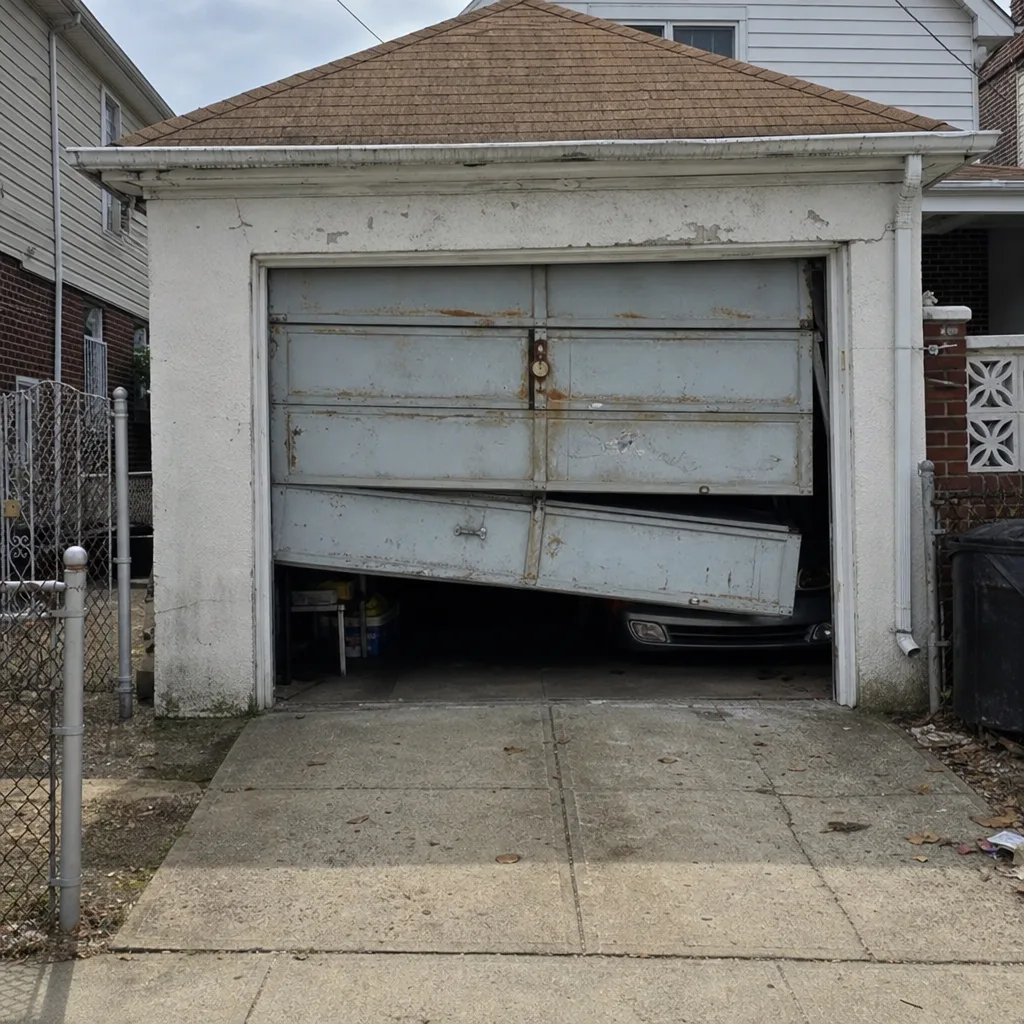 Before
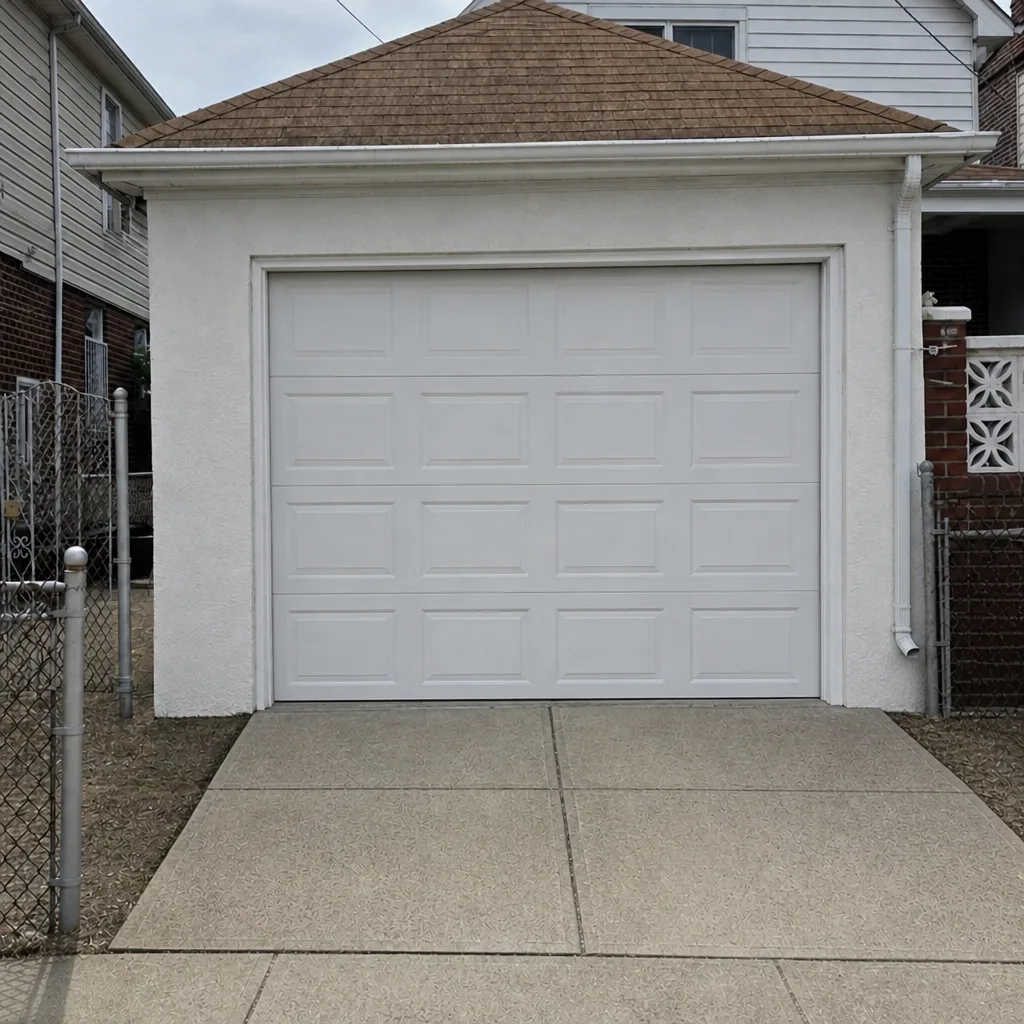 After
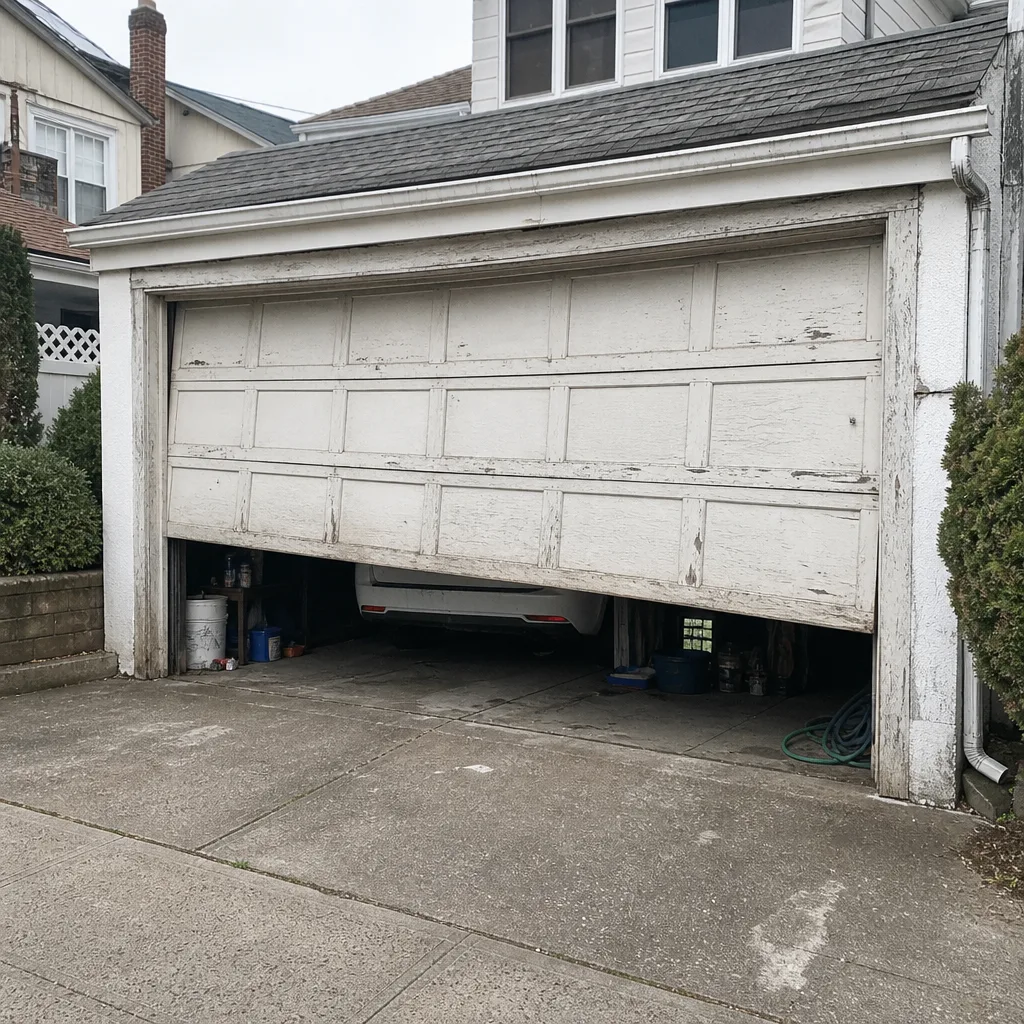 Before
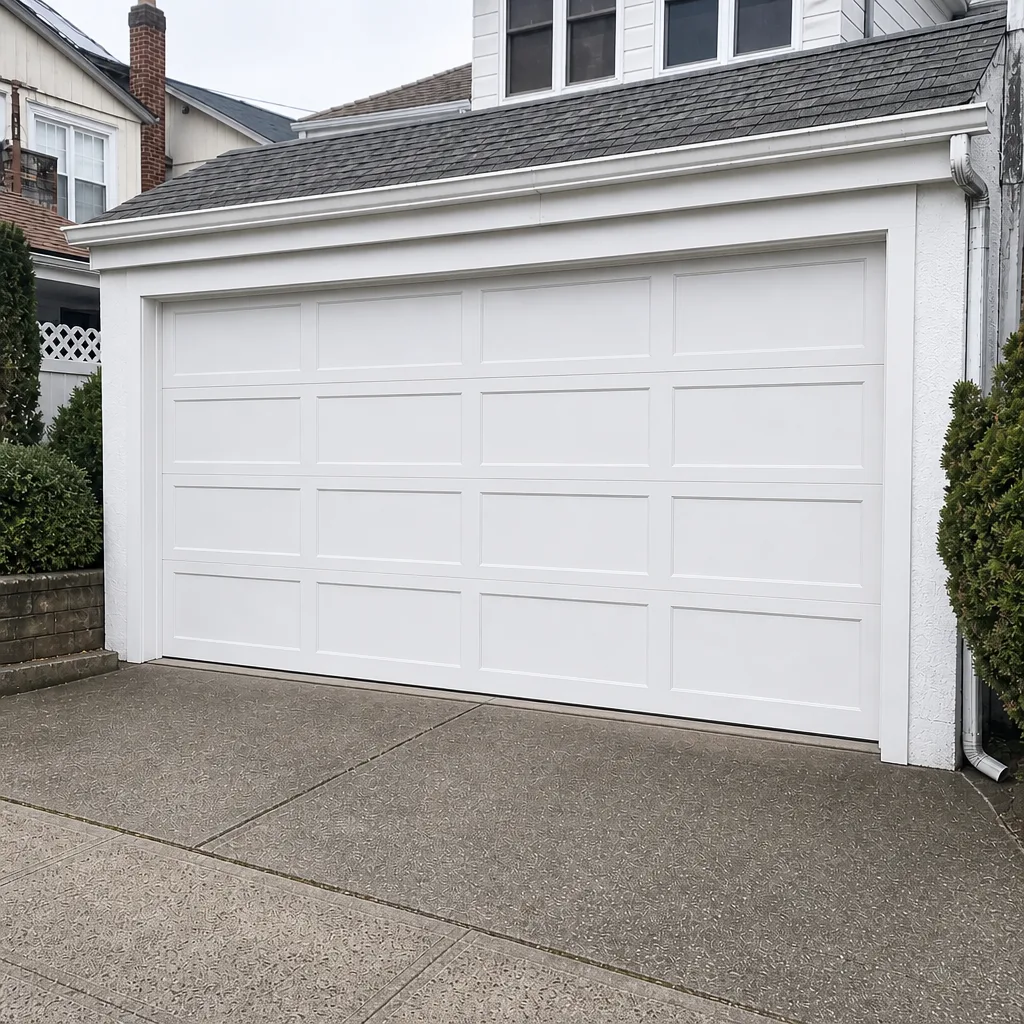 After
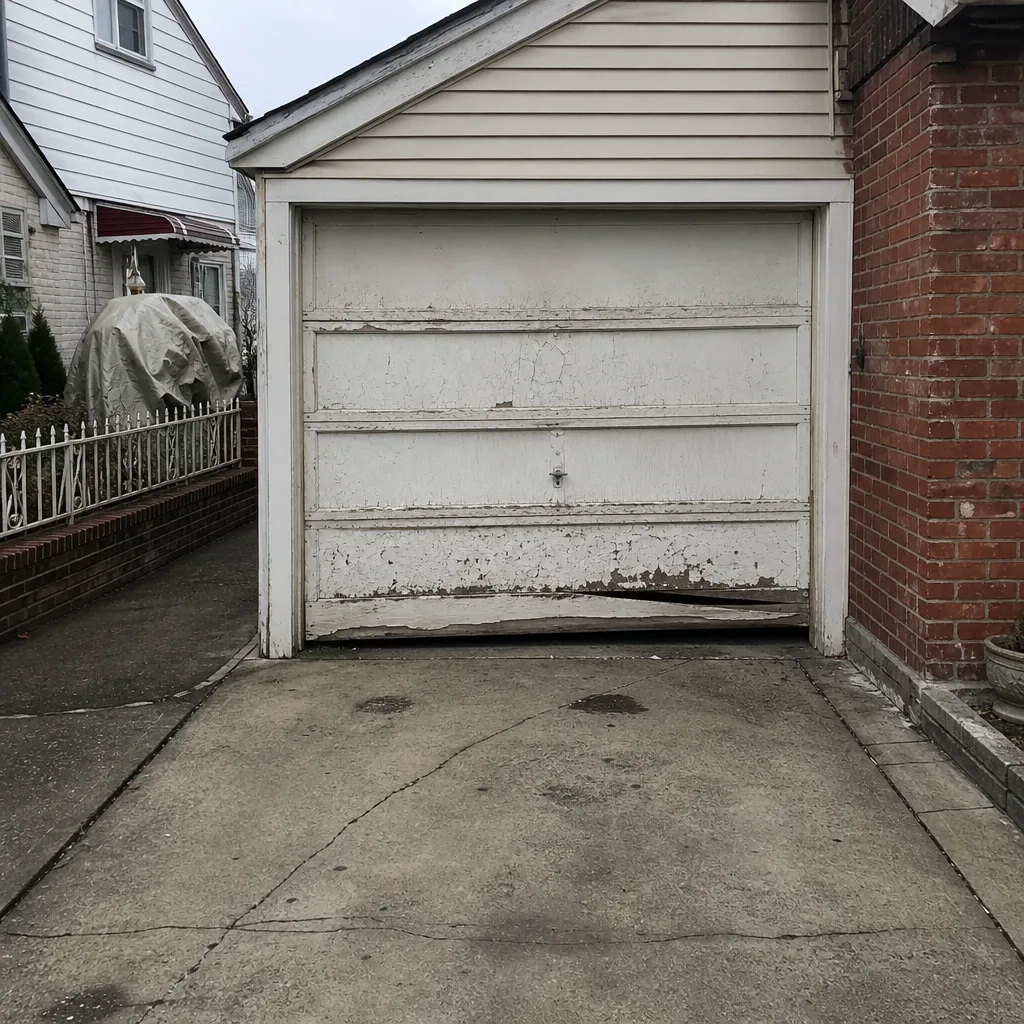 Before
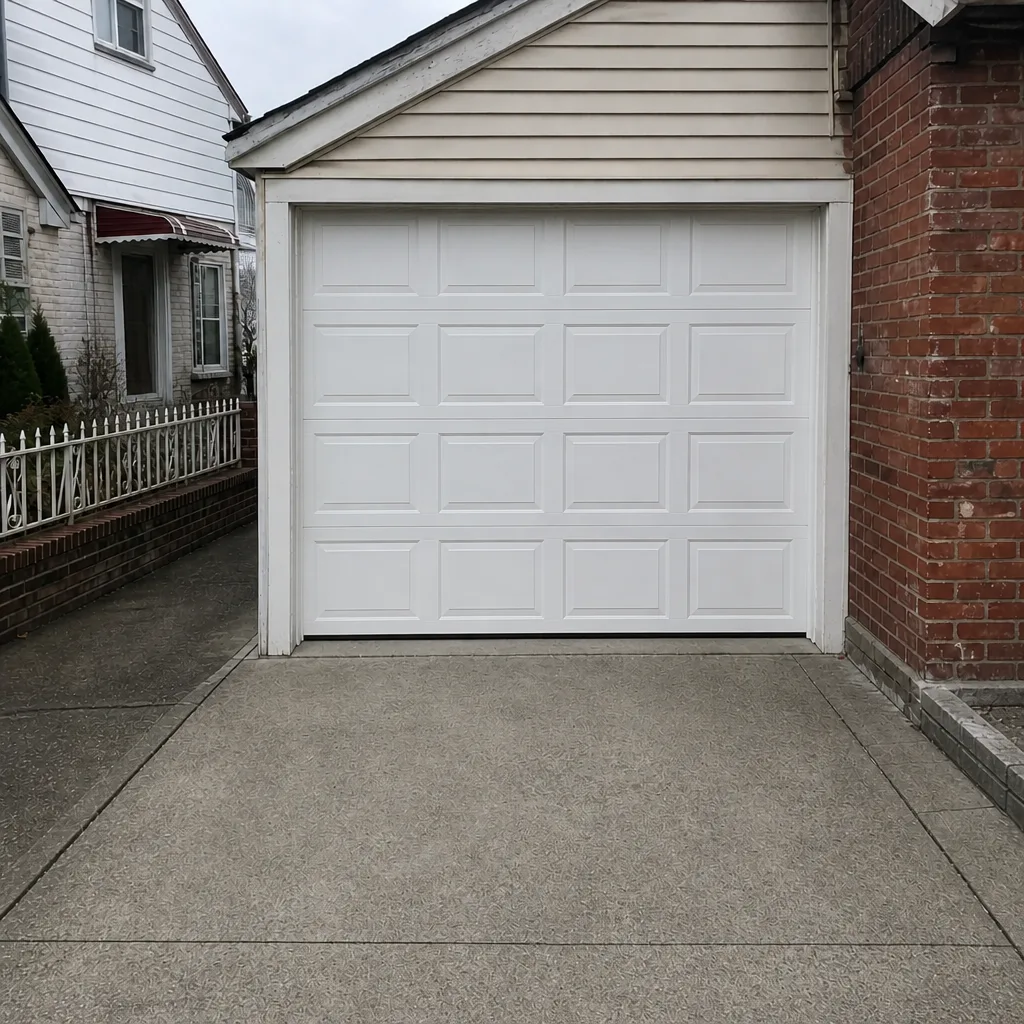 After
Common Mistakes to Avoid
- Wind bars with no controlled release. A screwdriver or random rod substituted for a proper winding bar is how people get hurt. A slipping rod releases the full spring load at once, and there’s no second chance to react.
- Cutting a header to fit a bigger door. Structural modifications change how the entire opening bears load, and in NYC that’s the kind of unpermitted change that can complicate an insurance claim. Let a pro assess it first.
- Spraying lubricant on the track surface. It seems helpful, but it makes the rollers slide instead of roll and can cause the door to bind dangerously. Lubricant goes on hinges and bearings, not the track.
- Running to a new opener without diagnosing the old one. A sensor out of alignment looks exactly like a dead motor from the inside of the car. A little diagnosis saves the price of a needless replacement.
- Ignoring a door that reverses mid-close. That safety reversal exists to protect people, and overriding it is how a door closes on a person. Fix the underlying issue, don’t force the cycle.
- Assuming the local hardware store parts are universal. Wayne Dalton and Amarr doors use proprietary components, and a generic bracket won’t hold the load. Match the part to the door.
- Replacing only one spring of a matched pair. A pair is usually replaced together because both springs share the same cycles. Replacing one leaves the next failure waiting.
Frequently Asked Questions
No. Garage door springs store enough mechanical energy to cause a fatality when released unexpectedly, and that risk remains even with careful work. Spring replacement requires proper winding tools, controlled procedures, and steady hands, and the injury risk is exactly why we treat it as a professional-only job. Call us for safe spring replacement in Bensonhurst.
Weatherstripping, safety sensor alignment, lubrication, hardware tightening, and testing the safety reverse are all safe for a reasonably handy homeowner. These involve no stored spring tension and no electrical disassembly. If the work touches a spring, cable, bracket, or motor internal, hand it to a professional.
It can. Structural modifications made without proper documentation can put a claim under scrutiny, and insurance companies look at whether the work was done to standard. A professional repair or installation leaves a record an adjuster can follow. Ask your own insurer for the specifics that apply to your policy, and keep records of any professional work.
Yes. We’re fluent across eight widely installed brands, including LiftMaster, Chamberlain, Genie, Clopay, Amarr, Wayne Dalton, Craftsman, and Raynor, so we recognize proprietary parts and error codes without guesswork. Call (833) 508-9946 and we’ll help you identify what’s failing and what it costs to fix.
Typical repairs run from a modest service call for sensor alignment or hardware up to a larger bill when a spring pair or an opener motor is involved. We quote and agree the price before any work begins, so the written estimate sets the final price. Call (833) 508-9946 for a free estimate and an honest diagnosis.
If your door is stuck and the house or car is exposed, treat it as an emergency and call for a same-day response. Don’t attempt to force the door down or climb under a partially open door, because a door that moves unexpectedly can cause serious injury. Emergency response is a genuine capability we offer, with fast dispatch from 7am to 7pm.
The Bottom Line
The DIY question for garage doors isn’t about whether you’re clever enough. It’s about whether the task involves stored energy or electrical hazard, and the line is clear. Weatherstripping, sensors, lubrication, minor tightening, and safety checks belong to the homeowner. Springs, cables, brackets, and opener internals belong to a trained professional, because the energy in those parts can cause a serious or fatal injury in a fraction of a second.
The hybrid path is the smartest one for most Bensonhurst homeowners: do the safe work and the diagnosis yourself, then hand off the dangerous components to a specialist who knows your brand and quotes the price before starting. That’s the approach that saves money without buying a risk you can’t take back. For an honest diagnosis and free estimate, call Garage Door Repair Bensonhurst at (833) 508-9946.
Written by the team at Garage Door Repair Bensonhurst.